Category Archives: London

Hare Marsh and Rabbit Marsh: fact and fiction in Bethnal Green

Last month, a friend bought me ‘King Dido’ by Alexander Baron, a lost London novel written in 1969 that has recently been reprinted. It is set in the East End in 1911 and is about Dido Peach, a taciturn docker who almost against his will and certainly against his intentions becomes a vicious criminal, the boss of his manor. It’s a great book – lively, cynical, witty, violent yet thoughtful; it reminded me of Camus’ ‘The Stranger’, but filtered through a very exacting East End eye.

Off  Cheshire Street, south of where it meets St Matthew’s Road, you will find an easily overlooked dead-end street called Hare Marsh. This is where Baron’s mother grew up and it’s where Baron places Dido’s small and rather pathetic manor, renamed Rabbit Marsh in the book.

Originally, Hare Marsh was the name given to the entire area. It had been built on since before the 1670s, but had long been a slum by the time Baron’s book was set. He writes:

‘Rabbit Marsh acquired its name at the end of the seventeenth century, when it was a green and pleasant country place on the outskirts of London. Artisans came here to picnic, practise their sports and trap the rabbits, which abounded… The industrial revolution had turn the whole eastern quarter into an immense slum which had overrun Bethnal Green. Rabbit Marsh was swallowed up with the rest… ‘

This is why William Cobbett called London ‘the Great Wen’, a monstrous cyst that was consuming the country around it, and you can trace the development and decline of Hare Marsh in maps.

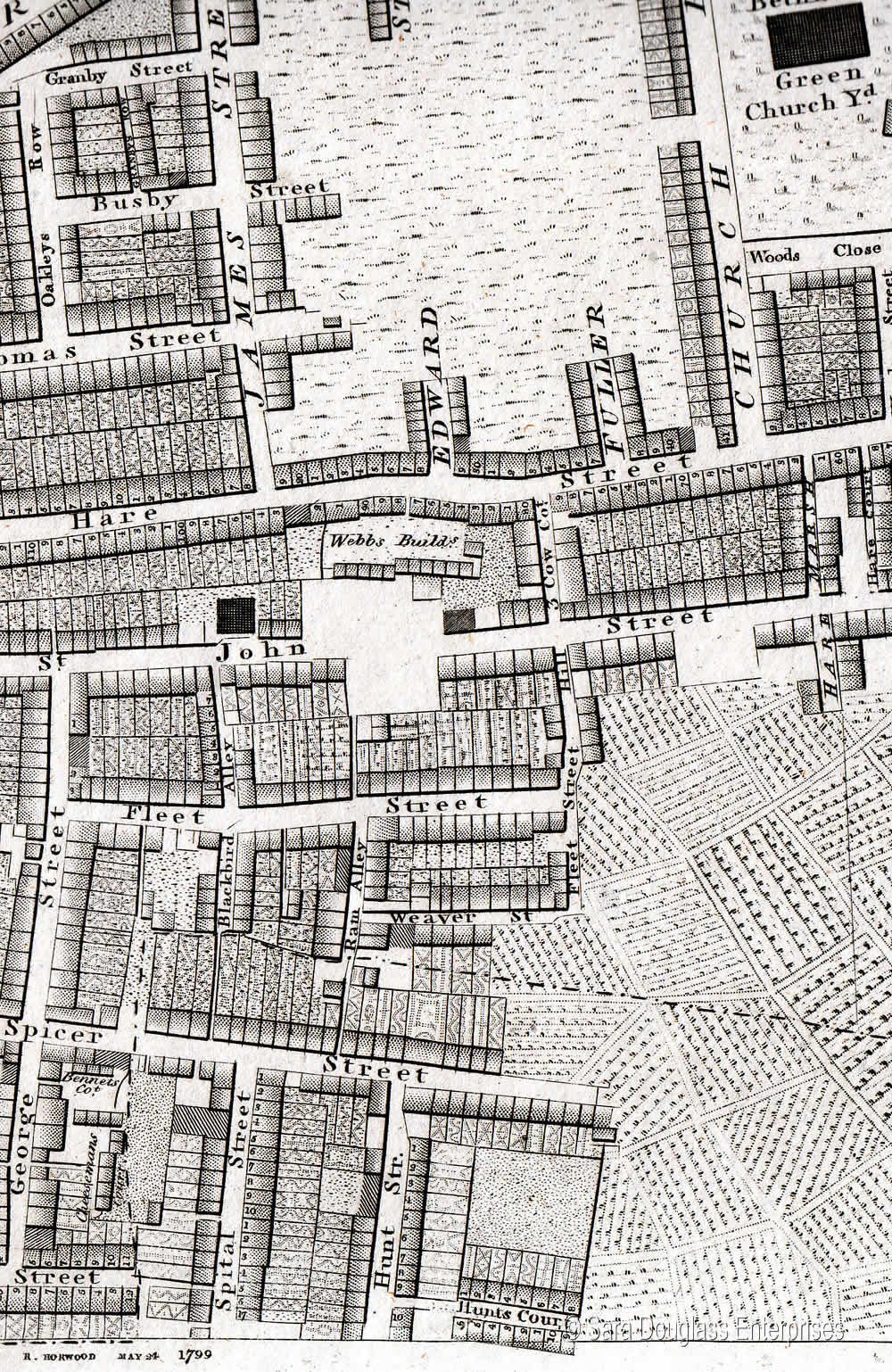
Here you can see it on this enlarged square of John Rocque’s London map of 1746. It’s towards the top of the map in the shape of a little lane coming south off Hare Street, the last turning on the right, and heading into fields. Bucolic, no?

To get some perspective, here’s a link to the whole map; Hare Marsh is in square 1F.

Now, here’s the incredible Horwood map of 1792 – Hare Marsh is on the far right, still an open and pleasant looking space but buildings are starting to encroach.

It hasn’t changed much by the time of the Greenwood map of 1827.

It’s the short street off Hare Street (as Cheshire Street was known until sometime between 1929 and 1945) directly below St Matthew’s Church right next to the big black square.

The square is the workhouse and Hare Marsh also contains almshouses, buildings that show there has been a change in the area’s status. But there’s still no sign of the railway, so even now Hare Marsh opens directly on to fields.

That was soon to change.

Here it is on Booth’s poverty map of 1898, coloured dark and light blue – not quite black (semi-criminal) on Booth’s colour coded scale, but not far off it. Bethnal Green is now entirely built over.

Again it’s the little turning off Hare Street – you can just see it between the ‘r’ and ‘e’ of street. By now, the railway is very much in place, closing in the inhabitants and offering them no escape. This feeling of dead-endness, of a lack of options, of claustrophobia, is central to the atmosphere of Baron’s book and partly explains why he chose this as the location. The railways brought London its greatest devastation since the Great Fire, and this is a great example of the adverse impact it had on individual streets.

Finally, here it is (square aD) in 1922 shortly after the period in which Baron’s book was set (and again in 1952, by which time Hare Street had become Cheshire Street). What had been a quiet lane, open to fields and on the very edge of London, was now a cul-de-sac, hemmed in by a noisy and polluting railway, in the heaving centre of London’s chaotic and overpopulated East End. The perfect location for a novel about poverty and powerlessness.

More on Hare Marsh later.

Many of these maps are available for purchase from the linked websites.

Free London writing talk with Iain Sinclair

Iain Sinclair is one of three writers who will be giving free talks on the subject of ’21st-century London writing’ at the University of Westminster’s Regent Street campus (309 Regent Street, W1B 2UW) starting next month.

Sinclair will be talking on March 4 at 6pm. He will be followed by Toby Litt on March 11 and Rachel Lichtenstein on April 22, both at 6pm. The writers will discuss their work in relation to the city and the opportunities and challenges it offers/poses to contemporary writers.

All talks are free and take place in the Boardroom, but booking is essential. Reserve your seat by emailing Sharon Sinclair at sinclas@wmin.ac.uk to book a place.

Love is…

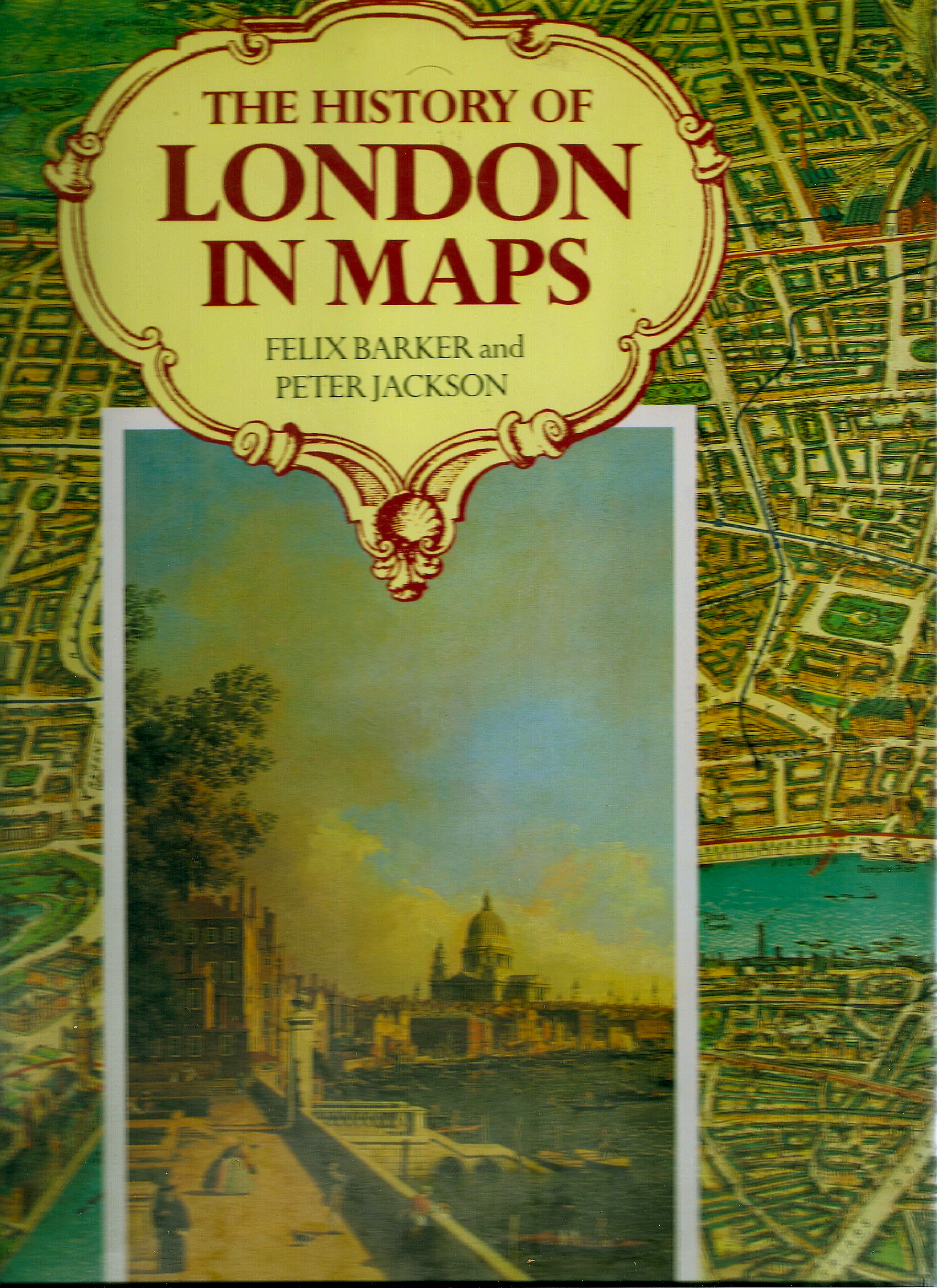
Another book on London maps, for a tenner, from Charing X Road. Yes, I had to get it for myself, but there’s no shame in that. Happy Valentine’s for those so inclined, I’m off to recline with John Rocque

War (museums), what are they good for?

After last week’s trip to the Imperial War Museum North, this week I was at its southern sibling, the original IWM in Lambeth.

I always look forward to a trip to the IWM, not because I have a particular fondness for military memorabilia – although I did have a youthful obsession with the novels of Sven Hassel and still go weak at the knees at any mention of Colditz (it’s not my favourite prisoner of war camp, but I won’t go any further because I’ve probably already put you off with the words ‘favourite prisoner of war camp’) – but because the IWM has a well-deserved reputation, round my house at least, for putting on the best exhibitions in London. Only the Wellcome Collection can compare.

Their latest, opening in time for half-term, is the Ministry of Food about WWII rationing. Not the most promising subject, at least not until placed in the IWM’s capable hands. This, remember, is the museum that managed to make a subject as dull as camouflage not just interesting but fascinating and essential.

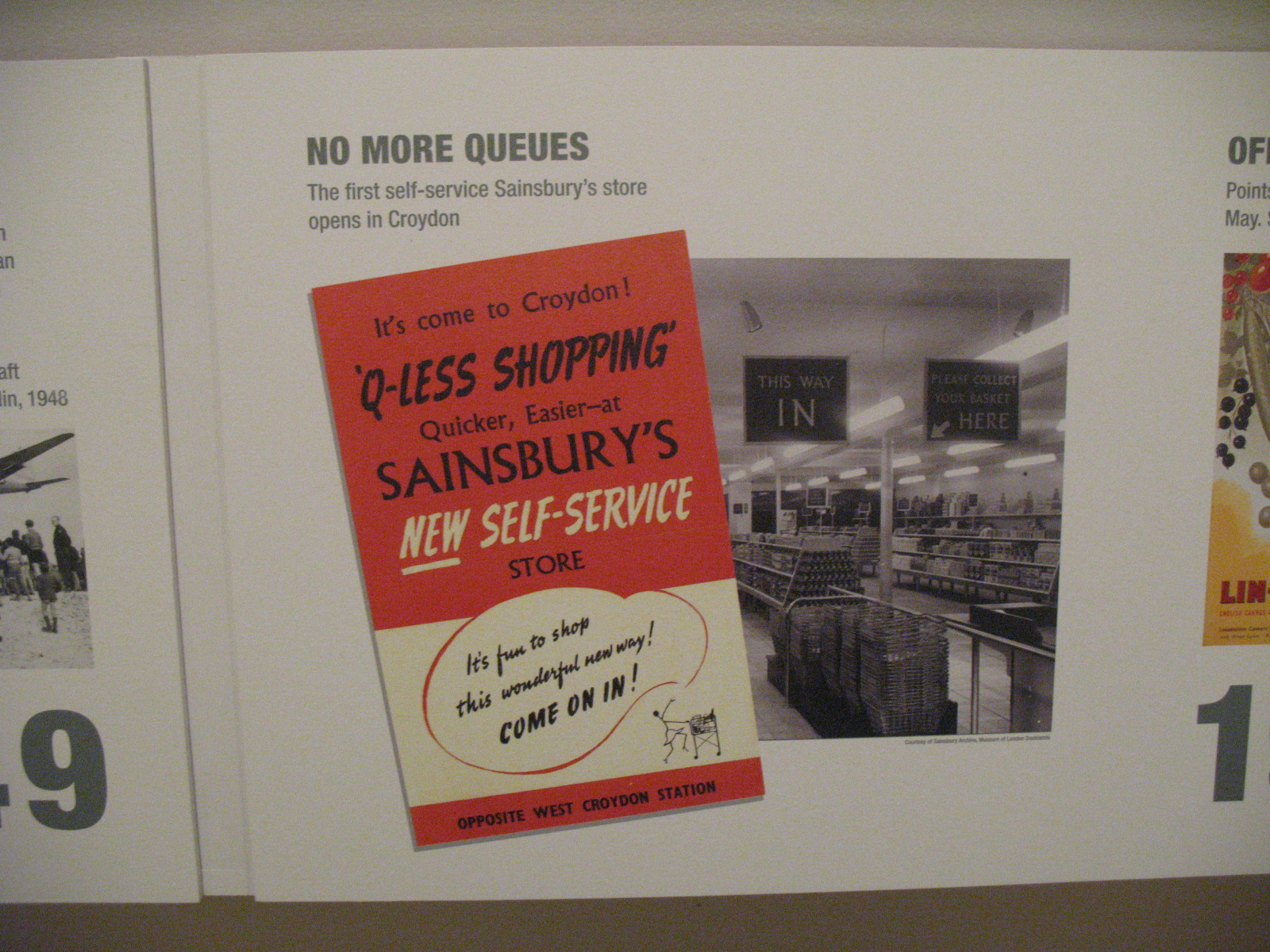
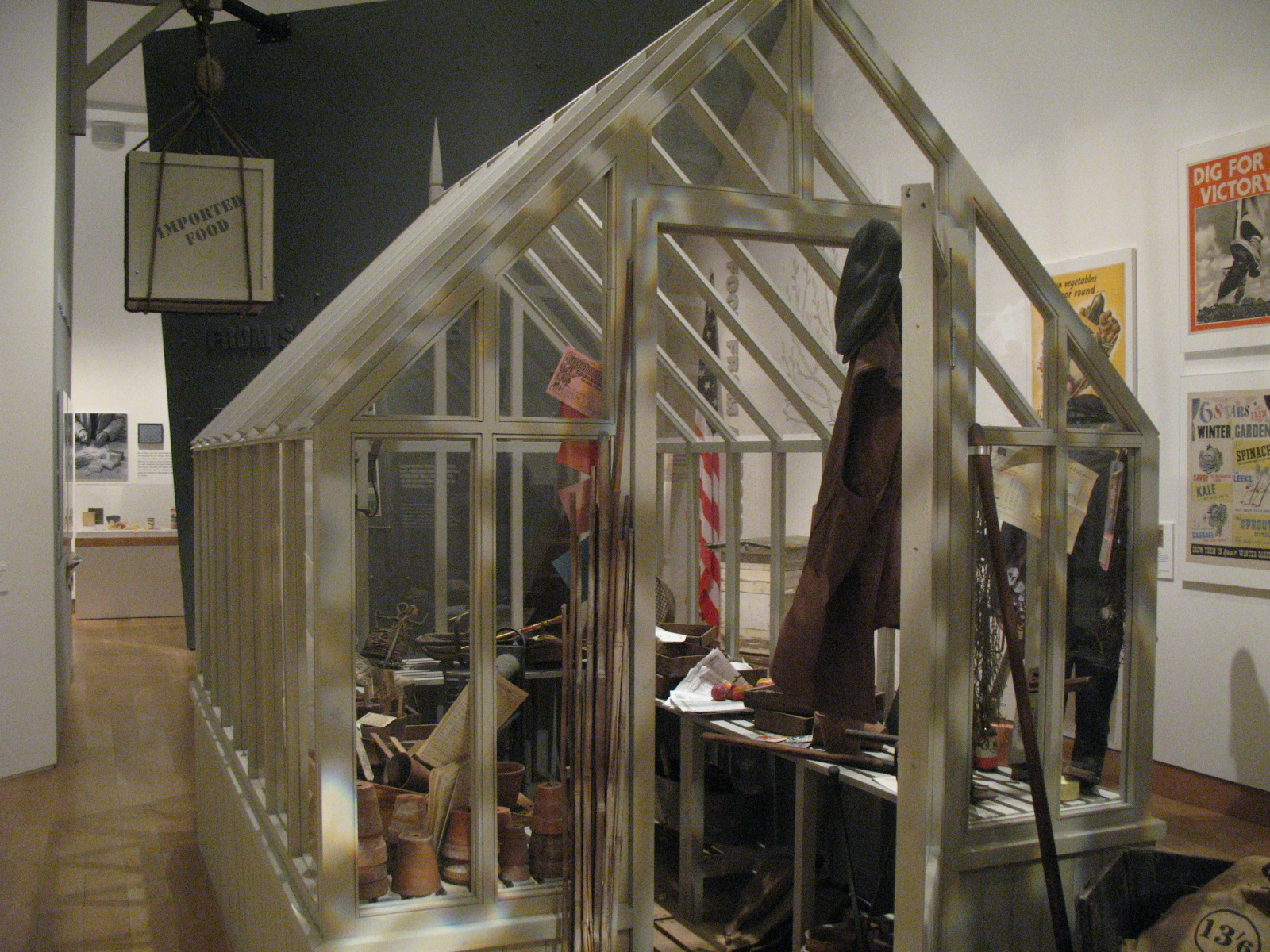
Starting with the land girls and ending with the arrival of Sainsbury’s in Croydon (pictured above), the exhibition looks at just about every aspect of food production during the war. There is a great selection of photos, paintings, posters and props, and also some terrific larger set-pieces such as a full-size greenhouse and a beautifully stocked walk-in wartime shop, a snapshot of which can be seen at the very top. The canteen is also running ration-themed food including mock goose, made with butter and marmite, although there is real food if that sounds a bit much.

It was educational, interesting, accessible, intelligent and fun – all those things an exhibition should be, but so often aren’t. And by that, I include most of those yawnsome chin-stroking ‘blockbuster’ exhibitions at the major museums that always get rave reviews even though everybody you talk to admits they found them a little dull.

No chance of that here. Look, it’s a greenhouse!

London’s museums face a tough time over the next couple of years, with severe budget cuts expected. At more than one museum, staff members have told me that they are expecting to take a hit whoever wins the general election ‘because they aren’t schools or hospitals’. Perhaps that’s as it should be and museums shouldn’t expect to be subsidised, but temporary exhibitions could easily suffer. They are expensive to mount and the bean-counters can be frustratingly short-sighted when it comes to the concept of long-term added value.

So go see Ministry of Food because a) it’s the right thing to do; b) it’s really very good indeed; c) you’ll discover a lovable character called ‘Potato Pete’. I wonder if he likes crisps?

Don McCullin’s London

Actual paid journalism alert, with this review I did for the Independent On Sunday about the Don McCullin exhibition at the Imperial War Museum North. McCullin is probably the world’s greatest photographer.

Although it takes place in Manchester and only comes to the London branch of the IWM next year, Londoners should check it out if they get a chance as there are a number of great London photographs featured. McCullin was born in Finsbury Park and says in the accompanying book, ‘Shaped By War’ ‘like all my generation in London, I am a product of Hitler. I was born in the thirties and bombed in the forties.’ 

McCullin  is an engaging writer. Finsbury Park, we are told, ‘oozed poverty, bigotry and all kinds of hatred and violence. It was preparing me for something I didn’t know was coming.’

His breakthrough photograph was this evocative London image. It shows seven of McCullin’s schoolfriends, moody young thugs from the Seven Sisters Road posing in a bombed-out house opposite the Rainbow in Finsbury Park. One of them later killed a policeman. McCullin sold the snap to the Observer and his career began.

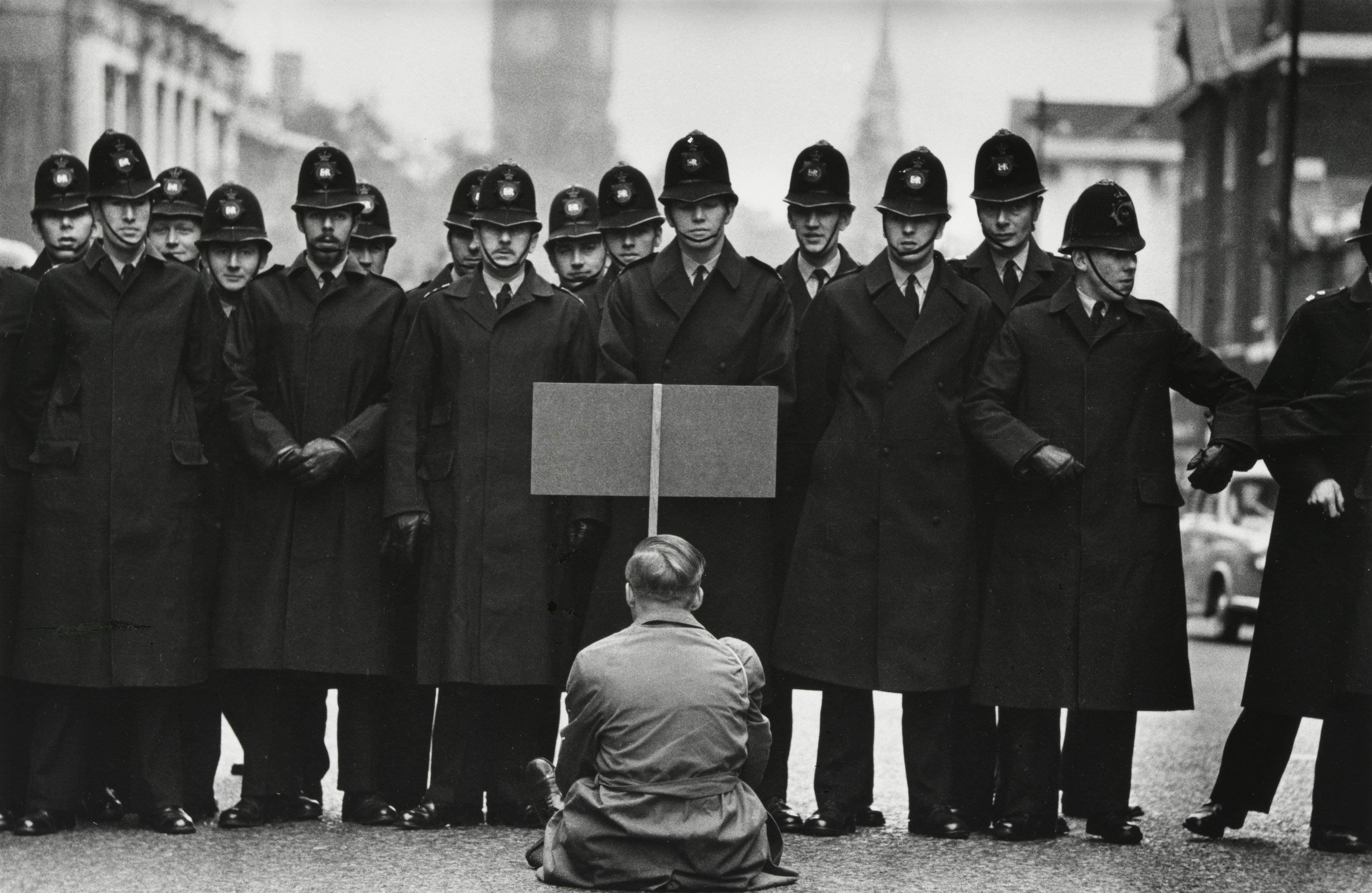
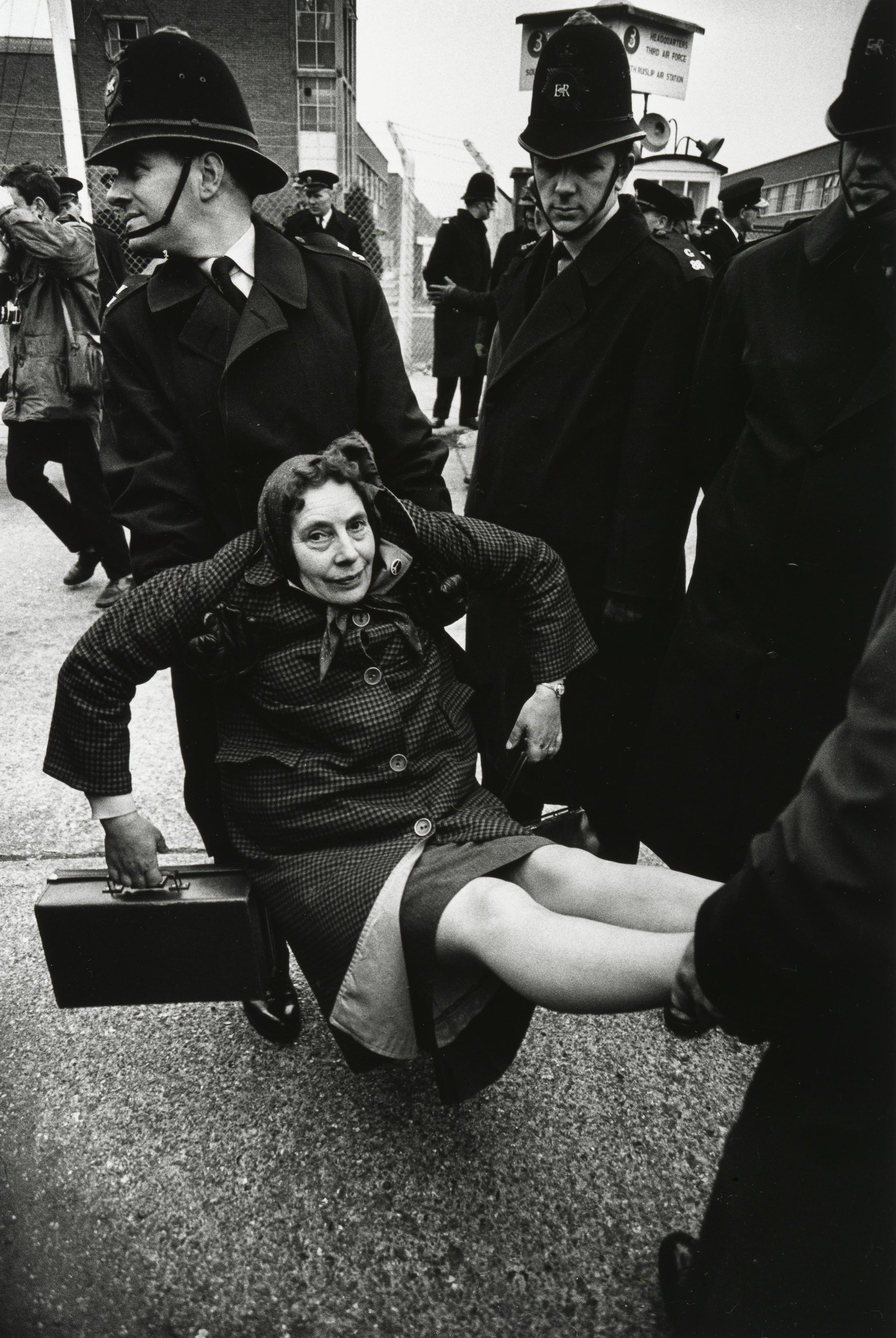
Although war became his arena, McCullin also took extraordinary domestic photographs. Here, those two worlds collide with two photographs of anti-war demonstrations in London from the 1960s.

Also on display is a brilliant photo of a newly arrived West Indian, dapper and outwardly confident, in north London from 1958. At the exhibition, you can compare this with a picture of two assertive young Asian Londoners in Brick Lane taken in 2007. So much change, but so much stays the same.

Understandably, there is nothing in the exhibition about McCullin’s work with the London homeless in 1989. On this subject, there is this remarkable image by McCullin taken in Spitafields in the 1960s. It’s like a still from ‘The London Nobody Knows’ crossed with a painting by Francis Bacon.

Why does everybody hate Tottenham? Understanding London football rivalries

London's football territories as seen by 'The Soccer Tribe'


The short answer is that you can’t . London’s football rivalries are as impenetrable as Jamie Carragher’s accent. They do not obey the strict rules of geography, they shift over time as relegations dent ambition or minor grudges get blown out of shape, and even at the same club, different supporters will have different rivals, some reflecting age, others temperament. 

Take Chelsea. Chelsea are based in south-west London, just a mile away from Fulham – the two clubs share a postcode and after many years apart have now shared a division for the best part of a decade. But while Fulham hate Chelsea, I have never met a Chelsea fan who considers Fulham their rivals. How can they? Fulham are lovely, probably the cutest club in England. Every time I look at Roy Hodgson, I want to tickle him. 

Most Chelsea fans instead plump for Tottenham, who brood far way in north-east London. The reasons for this rivalry are, like William Brown’s feud with Hubert Lane, lost to history but may have something to do with a) Jimmy Greaves; b) the 1967 FA Cup final; c) anti-semitism

It doesn’t end there, though. 

Other Chelsea fans, those with loftier ambitions, choose to hate Arsenal, the biggest and most successful club in London by far. A third batch, the type with scary faces and nicknames like ‘Doom’, go for West Ham, that den of resentment and blown dreams along the District Line, for reasons that have much to do with certain off-pitch incidents that have taken place over the years in pubs and stations all over London. But also because Chelsea and West Ham share certain psychological frailties that bigger clubs like Spurs and Arsenal do not understand. 

Most  London clubs have similarly confused rivalries. Arsenal are the most straightforward – they hate Spurs. And Spurs hate them, although some Spurs fans have a marked dislike for Chelsea, who have all but usurped their place as the second biggest club in London and aren’t shy to remind them of it. 

Rounding off London’s distinctive strain of anti-Spurs feeling, West Ham also hate Tottenham – like Chelsea, they know Arsenal are untouchable at the top of the London pyramid, but feel Spurs are gettable. But West Ham fans also hate Chelsea and Millwall. Now Millwall hate West Ham, but Charlton hate Millwall. Charlton also hate Crystal Palace, who hate Brighton, which really screws things up. Nobody really knows who Leyton Orient hate  – although Wiki says Southend. 

You might think that’s already quite enough hate for one post – in fact, you might even be wondering why we should discuss hate at all – but it gets even more confusing over in West London. Fulham’s Fayed-inspired rise through the divisions has seen them mount a stepladder of hate – first Brentford, then QPR, now Chelsea. QPR have made a similar trip in the opposite direction, but while they refuse to get involved in any sort of rivalry with Brentford, they haven’t got much choice because nobody else will pay them the slightest bit of attention. 

And we haven’t even started on non-league clubs yet. 

It’s a soap opera, isn’t it? 

Why all the hate? Well, most football fans are aware that their chosen club is unlikely to win anything in any given season, so if they ‘unsupport’ (a term conceived by When Saturday Comes many years ago) another club, preferably a local rival, they can take vicarious satisfaction when they lose. It’s a form of hedge betting and means that even though Spurs haven’t won anything substantial for decades and regularly get beaten by Arsenal, they can take tremendous pleasure in each and every defeat experienced by their bigger rivals. 

Personally, I hate hate

And Spurs.

'It was never meant to be a lifetime commitment': An interview with Peter Tatchell


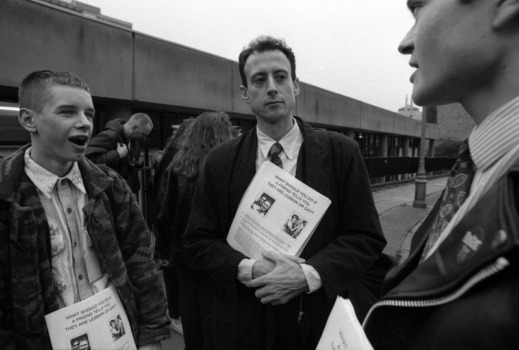
I interviewed Peter Tatchell at his house in 2008 for a piece that was intended to be the first in a series on Living London Legends but never ran. It seemed appropriate to reproduce it now in LGBT History Month. The picture is courtesy of Ralph Erle (www.ralpherlephotography.co.uk).

Peter Tatchell speaks with frightening precision. It’s the style of a man who has spent half his life being misquoted and the rest composing press releases. ‘In 1988 I organised the world’s first AIDS and human rights conferences to coincide with the World Health Organisation summit,’ he says, before the self-editing begins. ‘The pressure we exerted resulted in it adopting a declaration…  unexpectedly and unscheduled… unexpectedly adopting an unscheduled… unexpectedly adopting a previously unscheduled declaration condemning discrimination against people with HIV.’

Tatchell works as hard at getting his message across as he does at getting it right. He’s been doing this for years – ’40 years an unpaid human rights activist’, he says. ‘Yes, it is a big commitment and that’s why I’m still living in the same one-bedroom council flat in Elephant and Castle.’ Tatchell’s office is his lounge, a living space reduced by two bicycles (‘very bourgeois’) and piles of literature on human rights. On the walls are large cork noticeboards covered in leaflets and badges: ‘Whores Against Wars’, ‘Rockingham Against Racism’, ‘Lesbians Support The Miners’: niche, witty, passionate. If you planned an exhibition about half a century of human rights activism in London, it would end up looking a lot like Peter Tatchell’s living room. Indeed, some of Tatchell’s personal history is loaned to Manchester’s People’s History Museum.

But Tatchell isn’t so much of a martyr that he likes it this way. ‘The idea of being on 60k, having an office and a dozen staff is very attractive,’ he says. ‘I can’t get the funding. I’m regarded as too much of a maverick because I work both inside and outside the system. I will lobby government ministers, but I’ll also arrest presidents in the street.’

Tatchell’s devotion to human rights began as a 16-year-old in Melbourne in 1967, with the case of Ronald Ryan, an Australian prisoner who faced the death penalty when he was accused of killing a warden during an escape attempt. Tatchell mounted a passionate defence of Ryan, graffitiing walls and writing to the press. His parents were horrified.

‘My friends and family thought I was crazy. My father denounced me for defending a murderer; my mother was a bit more understanding but didn’t believe the government would send an innocent man to the gallows.’

Tatchell had been brought up in a strict Baptist household and even taught at Sunday School as a teenager, but he developed a different understanding of religion to his family.

‘My parents had no social dimension to their beliefs whatsoever. For them, Christianity was a personal matter – they never related it to issues of social justice. But I connected with Martin Luther King’s idea that Christianity was about not just how we behave personally with other individuals but how society was organised. I saw Christianity as an instrument for human and social liberation. My parents always taught me “Stand up for what you believe”. I gave up my religious beliefs at 19, but it influenced my politics and commitment to challenge oppression.’

Tatchell realised he was gay when he was 17. Homosexuality was still illegal in Australia. ‘You could be jailed and forced to undergo psychiatric treatment to ‘cure’ your homosexuality. There were no gay organisations at all, not even any switchboards or counselling services. There weren’t even any clubs, all you had was a couple of seedy bars. Most people met each other on cruising areas, which were very dangerous.’

Tatchell wanted to change that and again utilised his zeal for campaigning. He wrote letters to newspapers, initially anonymously but later under his name, and urged friends to help him set up an orginisation for gay rights. ‘They were too afraid,’ he recalls. ‘They said: “You’re crazy!You’ll get us all arrested and locked in jail, go away you stupid young boy.”‘

So he did, fleeing to London to escape the Vietnam draft. ‘It was only my intention to stay until there was an amnesty,’ he says, ‘but when I got here the Gay Liberation Front (GLF) had just been set up, I fell in love, got a good job, a nice flat – a temporary stay became permanent.’

On his second day in London, Tatchell saw a lamppost sticker advertising a GLF meeting. ‘So within a few days I attended a meeting and within a month organised my first protests.’ Already a veteran of direct action, he was ‘aghast’ at how supine the British protest movement was. ‘Australia was much more radical than Britain. Britain was pathetic,’ he says. ‘I was expecting direct action, civil disobedience, blocking of military installations – the sort of stuff we did in Australia. Even the quite radical Brits thought I was rather extreme and ran a mile at anything provocative.’

Under Tatchell’s influence, that changed. The GLF arranged sit-ins at pubs that refused to serve gays and lesbians; ‘zapped’ Professor Hans Eysenck, who adocated electric shock aversion therapy for homosexuals; and invaded Foyle’s on Charing Cross Road for selling books that the GLF considered to be homophobic.

‘It felt like being part of a revolution,’ recalls Tatchell. ‘Our slogan was “Gay is good” and those three words turned on their head everything people thought was true about gay people, that we were mad, bad and very, very sad. We were challenging the homophobia of millennia. The GLF were the first time in British history that thousands of people came out and marched to demand their liberation. We wanted to transform the laws, institutions and values of the whole society to liberate everyone, gay and straight, from sexophobic and puritan oppression.’

Unfortunately, many on the ‘non-aligned revolutionary left’ did not want to be liberated by homosexuals. ‘The vast majority of the left, particularly the Communists and Trotskyites, were viciously hostile to gay people,’ says Tatchell. ‘They denounced us as bourgeois degenerates and we were physically attacked.’

This partly changed in 1973, when Tatchell staged a one-man gay rights protest in East Berlin that ended with him getting interrogated by the Stasi and the bravery of which went some way towards challenging the homophobic mindset of the left. Similarly, his attempt to arrest Robert Mugabe in 1999 – ‘he was like a frightened 10-year-old boy’ – helped gain the respect of a right-wing establishment who had previously denounced him as a ‘homosexual terrorist’. The Telegraph  even recently suggested he should be given a medal.

Tatchell studied at the Polytechnic of North London and worked as a store designer. He lived in various parts of London and spent a year travelling, before settling in south London where he worked with the homeless of Waterloo and joined the Labour party. ‘Quite a few people were surprised. Alarmed! What motivated me to join was the rise of the left within the party and the moves to make it more democratic and accountable to grass roots members.’

Tatchell took his policy of direct action into party politics when he was elected secretary of the Bermondsey Labour party in 1981. One campaign saw him occupy HMS Belfast in protest at plans to build office blocks along the river front. ‘We bought a group concession in the name of the East Dulwich Tennis Club,’ he recalls, ‘and then strung huge banners from the bridge.’

Tatchell had more or less abandoned gay politics by this time, but he returned to the cause in the wake of the hugely controversial Bermondsey by-election. He says the ‘unwritten story about the Bermondsey by-election is that I was standing up against property developers for local working class communities.’ During it he was subject to homophobic abuse, much of it personal. 

‘I came to symbolise the battle in the Labour party between left and right,’ he says. ‘Those who wanted to manage capitalism and those who wanted to redistribute wealth and power. There was also the pure unvarnished homophobia of some people who didn’t like gay people and thought we were perverted and revolting. Those are the three things that came together.’

After Bermondsey, Tatchell realised that homophobic prejudice was far more widespread and vicious than he had realised. ‘That’s why I decided to put most of my energy into challenging homophobia. I had no idea it was a lifetime commitment.’

Tatchell argues that ‘women and gay people are the litmus test of whether a society is democratic and respecting human rights. We are the canaries in the mine’ and his commitment to gay rights still leads him into regular confrontations with theoretical allies as much as homophobic enemies. ‘Some on the left have savagely attacked me for pointing out oppression within minority communities,’ he says of recent run-ins concerning Islamic fundamentalists. ‘But I am defending women and gay people within those communities who have the same entitlement to human rights as the rest of us. If I ignored their suffering – that would be racist.’

Tatchell’s chosen way of life is one guaranteed to bring disappointed such are the forces stacked against him. ‘Yes, it induces a certain pessimism, but that is countered by the optimism that comes from a successful result. Somebody once described me as the patron saint of lost causes but often I manage to turn round lost causes and win them. That’s what keeps me going. my enthusiasm and inspiration comes from the many successes I’ ve had in helping individuals and contributing to successful campaigns. I’ve helped secure asylum for lots of genuine refugees and prisoners who are unjustly incarcerated – to see their joy is what keeps me going.’

Despunking chickens: London guidebooks at Guildhall


London guidebooks did not begin with Time Out or even Baedeker. There are thousands out there going back centuries, some aimed at specialist readers, others for a more general audience. I’ve got half-a-dozen myself and left around the same number behind at Time Out.

Finding a great London guidebook isn’t as simple as it might appear. I’ve often found that the ones with the most enticing titles and covers – ‘Len Deighton’s London Dossier’ or Nicholas Saunders’s groovy ‘Alternative London’ – are the most disappointing, as they promise far more than they could ever deliver. But Another Nickel In The Machine‘s merciless deconstruction of Hunter Davies’s ‘The London Spy’ suggests I shouldn’t give up hope yet.

And even the most mundane guide offers something for the diligent reader, even if it’s nothing more than a reminder of how rapidly London changes and how rarely it looks back in regret at what it has lost. A browse of 1986’s rather mainstream ‘New Penguin Guide To London’, for instance, left me pining for National Museum of Labour History, which was once based at Limehouse Town Hall and closed down the year the guide was published.

Pick carefully and there is a rich seam here, so fans of the genre – and there are many of us out there – will want to head to the Guildhall Library before the end of March to see librarian Vicky Hurst’s small curated collection of 30 London guide books, dating from 1755 to now. Among them are such appealing titles as ‘London of Today’ (1890); ‘Cooks’ Handbook for London’ (1902); ‘London for the Disabled’ (1967); ‘Swinging London: A Guide To Where The Action Is’ (1967); ‘Alternative London for Strangers: Survival Guide’ (1973); and ‘The Forest Guide to Smoking in London’ (1996). Split into two cabinets, the covers for the later ones are fab and I particularly loved Osbert Lancaster’s art deco cover for ‘London Night And Day’. The library has thousands such guides, as you would expect from what is perhaps the finest store of London books in the capital.

No space in the display though for my two favourites. John Timbs’s ‘Curiosities Of London’ (1855) is a wonderfully thorough Victorian A-Z that sits somewhere between ‘The London Encyclopedia’ and a standard guidebook, as it features cornucopic history with some practical information and is very readable.

I also love the rather dull-sounding ‘Absolutely Essential Guide To London’ by David Benedictus. It’s from 1986, is again laid out in A-Z format, and includes delightful trivia amid plenty that is useful. There are entries on ‘Chickens’ (a statue in Hornsey), ‘Foot Scrapers’ and ‘Tiles’. Restaurants, theatres and cinemas get reviews packed with (potentially libellous) anecdote and character, while the entry on ‘Prostitutes’ includes advice that even if you never use, you are never likely to forget: ‘if you must pay the girl or boy in advance, tear the note in half. Give them half and promise the other half after you’ve been despunked.’

The pub with no booze

Heard the one about the public house that forgot to renew its alcohol license? That’s what happened over in Greenwich, in a pub that I have promised not to name after speaking to a harassed landlady who informed me, ‘It might be funny to you, but I’ve just spent the whole morning down the council sorting out the paperwork.’

However, having respected her wishes to keep schtum for nearly 24 hours, I can stay silent no longer.

The pub has managed to secure an emergency license that allows them to serve booze from Friday to Monday, but during the week they have incorporated a bring your own bottle policy, as drinkers discovered when they turned up to the weekly quiz on Monday night and were then sent home to raid their own cupboards for leftover alcohol.

The owners of the nearby Theatre of Wine can expect to make a roaring trade for the next month.

Credit crunch: combating recession with potato-based snacks

When I first clocked a recession was imminent – after I’d checked the relevant terms of my contract and cancelled the statue of myself in solid gold I was having made for the front garden – I began to think about the opportunities that a recession can create.

It’s now well established that many business start up during a downturn, largely because lots of people are out of work and have nothing better to do than be a bit imaginative. This time round, with the recession taking such a toll on incredibly wealthy financiers and bankers, who earned far more money during the Great Moderation than they could ever spend no matter how much they ballsed up house prices trying, I was convinced some fascinating new businesses would emerge.

And so it has proved. A while back, a man called Ajit Chambers got in touch with me to promote his bold plan to open up London’s disused Tube stations to the public. He is still ruthlessly pursuing his vision and will, I believe, realise it, sooner rather than later. For more, watch this space.

At around the same time I heard from a friend, Marisa Leaf, who has set up a company called Hubbub that takes orders from customers for posh delis around Islington (of which there are many) and delivers them all in one go to your door. I wrote about it in 2008 and on Tuesday, she was interviewed in the Evening Standard. In that piece she mentioned in passing one of the people whose food she sells, a banker from Highbury who jacked it all in to become a fisherman on the south coast. I interviewed him yonks ago, and the piece is due to run in Time Out sometime before I die, or so I have been promised.

So that’s three stories that have come to me without me even looking, as all the best stories should.

Where am I going with this? Well, I am in a decent position to start up a business of my own, being all of a sudden time, if not cash, rich and finding freelance journalism a potential struggle given that I’m not descended from anybody famous, daringly tedious/controversial or Stephen Armstrong.

But there is a problem: I am suffocatingly risk-averse. And I am quite lazy. However, I do have one idea that I would love to take forward if somebody else is prepared to do the taking forward bit for me.

It’s a crisp shop. A shop dedicated to selling not just any crisps, but the most interesting crisps – or other potato-based snacks – from around the world. These would be crisps of the rarest and most unusual flavours, the best packaged, golden oldies, with lots from Japan, where I do not know for sure but am pretty certain they make some of the most incredible crisps known to the crisp-world, in wonderful flavours and colours, and all with pictures of schoolgirls on the cover. This shop would be in south London, probably Streatham, and look like one of those trainer shops where people buy lurid and expensive footwear that they never intend to wear. It will be a design classic, floor-to-ceiling cellophane. Whenever Jay-Z comes to London, he will make my crisp shop one of his first ports of call, because I am sure Jay-Z loves crisps.

The irony of this is that I do not particularly like crisps. Or Jay-Z for that matter. But this only adds to the beauty of the concept.

If you like it, I will next tell you about my plan for a restaurant that only serves starters and desserts, because main courses are, and we really should be prepared to admit it by now, invariably a crushing disappointment.