If there’s one thing I can’t resist it’s a hole in the ground.
Whenever I see one – which is often in London – I have to peek inside. What do I hope to see find? Roman coins, a secret pavement, a Victorian sewer, an uncovered river, clay pipes, Tudor jewellery, treasure, booty, anything strange, fascinating and previously buried.
This week, I interviewed Top Topham, founder member of the Yardbirds. At one point he told me: ‘I also remember seeing Keith West’s Tomorrow, who had Steve Howe (later with Yes) on guitar. He was brilliant, a completely different style. They were a very interesting experimental band. ‘My White Bicycle’ was quite infectious, very ahead of its time.’
Tomorrow were a fascinating mid-60s band who had close ties with the London counterculture, regularly performing at head venues like the UFO Club and the Roundhouse.
‘My White Bicycle’ was inspired by the Dutch anarchist group the PROVOS. Counterculture writer Stewart Home explains:
‘The PROVOS announced in a leaflet that white bicycles would be left unlocked throughout the city for use by the general population. The prototype of this ‘free communal transport’ was presented to the press and public on 28th July 1965 near the statue of Lieverdja. The plan proved an enormous success as a ‘provocation against capitalist private property’ and ‘the car monster’, but failed as a social experiment. The police, horrified at the implications of communal property being left on the streets, impounded any bicycle that they found left unattended and unlocked.’
My review of the Wellcome Collection‘s new exhibition Skin is in the New Statesman this week. Read it here.
Cunningly, I snuck the key phrase into the very opening paragraph:
‘Generally, museums put on exhibitions so that people can learn about things they don’t already know. The Wellcome Collection does almost the reverse: it prefers to start with something that is familiar – in this case, skin – and make it unfamiliar.’
Skin is another very good exhibition from the Wellcome, who stand almost unique among British galleries and museums as a body that is so rich they have no requirement to go cap-in-hand to the public purse or to private sponsors, and consequently have no need or desire to dumb down or exhibit tedious ‘blockbusters’ (I’m looking at you, British Museum) in a bid to pull a cash-and-existence-justifying audience through the door.
Few establishments are so fortunate and few curators would know what to do with themselves if given this sort of creative and intellectual freedom.
Arts funding is going to take a proper kicking over the next few years. The Wellcome Collection will provide rare shelter from the storm, and one with free wi-fi, a bookshop and Peyton & Byrne cakes. What more can you ask for?
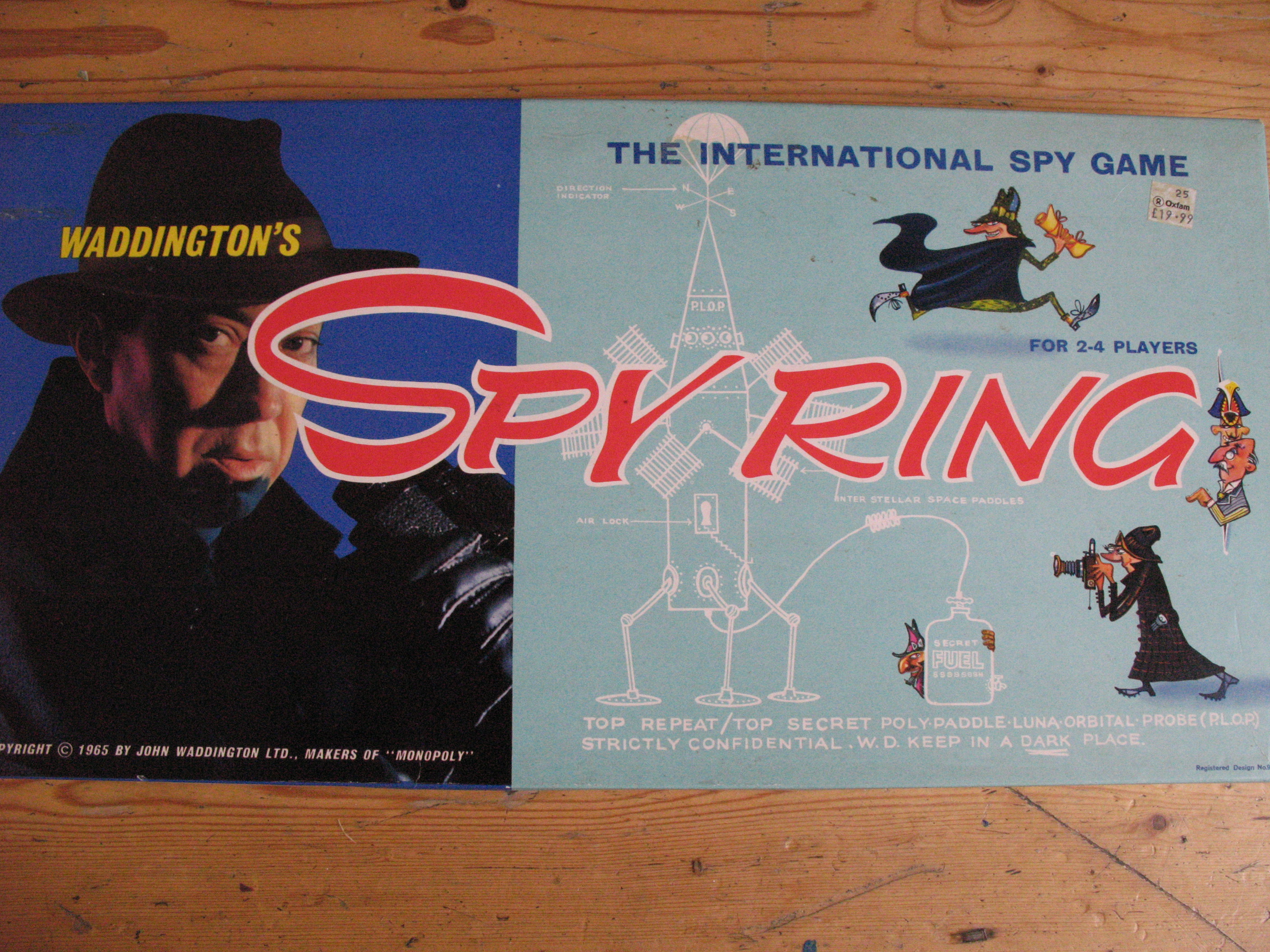
Spies have been in the news recently which got me thinking about my brief dalliance with the half-life of espionage.
I was asked to go undercover by the Sunday Times in the mid-90s. and this assignment opened my eyes as to how journalism really works, for good and ill.
I was 19 and working on the sports desk as a dogsbody, tea-maker, fact-checker and column-writer. The call went up from the sweaty suits in the newsroom – they needed volunteers who were under 25 and hadn’t been to university. My sports editor put me forward, so for the first time since the Lesbian Avengers broke into the building and chained themselves to the desks, I trundled into the office where the serious journalists worked.
The story went thus: the ST editor had been having dinner with an old friend, who told him that some universities – mostly former polys – made it far too easy for students to get their degrees. Some of the tutors practically wrote the essays and answered all the questions in exams. They did this, so I was told, to increase the pass rate, which meant the universities got more funding.
The editor thought it would be a whizzbang idea if he sent a couple of journalists undercover, to enrol as students at former polys and reveal this nefarious business to our readers. And on this flimsy basis, I was to be given a large weekly stipend, leave of absence from the sports desk and an unlimited supply of pink chits – the blank taxi receipts that were the most highly valued currency in the building.
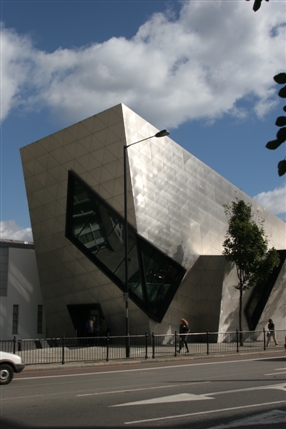
So I did it. I went to the University of North London on Holloway Road and enrolled in the only course they had left: Irish Studies. I was comfortable with this. I had recently left a Catholic school, so I’d been surrounded by plastic paddies for the best part of a decade, drank Guinness and could name the Republic of Ireland first XI without flinching. I came up with a cover story about my dad being from Ballymena but never talking about his Irish heritage, and winged it from there. They probably smelled a rat straight away – nobody was shy of talking about their Irish background in the mid-90s, when the craic and Big Jack were all the rage.
My brief was to get close to the students and ask them leading questions about the nature of the tutoring they received, so I went to lectures and then hung out with my fellow students in pubs, drinking on expenses and getting free cabs home. It was quite the thing. Who wouldn’t relish the chance to get to play at spies?
I quickly discovered three things.
I wasn’t a very good spy. I kept forgetting to record conversations or got drunk and couldn’t remember what had been discussed. I couldn’t think of any leading questions and regularly forgot my cover story.
I wasn’t a very good student. Studying bored me senseless and I couldn’t write the sort of essays required by universities.
This wasn’t a very good story, and even if it had been I didn’t want to write it. My fellow students were all older than me and from a far more disadvantaged background. They were genuinely enthused about this opportunity to receive further education and many of them had left secure jobs so they could do so. I had absolutely no desire to stitch them up at the bequest of the public scho0l and Oxbridge educated bigwigs back in Wapping, not for all the pink chits in London.
Like a double agent, I strung both groups along for a few weeks – the students, cos I it was fun; the journalists, because my access to taxi receipts had made me a minor legend among the peewees in the corridors of Wapping. But the whole thing was making me increasingly uncomfortable – having to lie to everybody – and I was really very bored of studying, so I wrote a heroically non-committal wrap-up memo to the news editor and then got the sports editor to insist I was recalled.
Another journalist had enrolled at a different University and he stuck it out. After he’d done a full year, he ended up writing a SENSATIONAL two page expose that amounted to a whole lot of nothing, as he freely admitted.
And what did I learn from all this? A few things, all chastening. One was that newspapers made decisions about stories based on whims or chance encounters, and would follow these through to the bitter end even when it was clear there was nothing to write about, and that I wasn’t very good at doing this. Even if it had been a good story, I wasn’t tenacious enough to exploit it.
The other was that I would never be a successful spy.
Although I am lucky enough to live just a short belly flop from Brockwell Lido, it will be a cold day in Cairo before you ever see me in the water.
Some people adore swimming. They embrace the invigorating iciness, relish the chance to strip down to their Speedos and take on the chill of the British outdoor pool, defying both cold and dreaded shrinkage (‘like a frightened turtle’) in search of their daily dip.
I am not one of those people.
I have never liked swimming. I don’t like getting wet, I don’t like changing rooms, I don’t like being cold and damp, I don’t like shrinkage. I know that after the initial ice-induced paralysis has worn off the swimming pool can be almost pleasant, but I don’t like the actual mechanics of swimming either, the hard work, the splashing, the water in your mouth, eyes and nose, the getting overtaken by grannies, the knowledge you are wallowing in urine, saliva and chlorine.
Slather me in seal fat and offer me the Queen, and I still won’t go near the shallow end even on the hottest day of the year. What’s the point? You can’t read in a swimming pool.
So, it is perhaps rather ironic that one of my favourite London songs is about a lido. ‘Springboard’ by The Arlenes featured on their 2002 debut album ‘Stuck On Love’. ‘Gospel Oak Lido is the place to be,’ sings Big Steve Arlene in this brisk, wide-eyed ode to swimming and love at a London lido. The sound quality isn’t great, but give it a listen here.
The Arlenes were that rare beast, a decent English country and western band. English artists have always struggled with authentic c&w. There have been some greatalbums and songs, but these are usually pastiches or neo-homages. There have been some interesting reinventions from the likes of the Mekons. But rarely have a British band truly embraced country music in all its authentic glory, creating a noticeably British take on an American art form. (A nod here to The Rockingbirds, who also got it.)
Perhaps that’s because country is too sentimental for British tastes, or maybe it’s because it’s not something we Brits grow up with – how often do you hear a country song on British radio (similarly, how many decent British Westerns have you seen)? But while imported sounds like blues or jazz are swiftly assimilated into the British musical tradition, country has always been the unwanted runt, something to snigger at, an American tradition we don’t understand like eating grits, going to church and being optimistic. Even country artists like Johnny Cash are celebrated for their rock more than their country, while the country influences behind Elvis Presley are rarely grasped on these shores.
The Arlenes, who were a half-English, half-American duo, genuinely adored country, and ‘Springboard’ oozes the sort of sunny outlook that David Hockney had to leave Yorkshire and move to California to find. It is a difficult thing to pull off in London, where the sun doesn’t shine all that often, nobody knows the words to ‘Pancho and Lefty’ and some miserable sods won’t go near a swimming pool, but they managed it.
I’m not sure where they are now. Their second album ‘Going To California’ – lacked the panache of their debut and the band disappeared, but I thank them for ‘Stuck On Love’, which I adore and listen to frequently.
So put together ‘A Bigger Splash’ and ‘Springboard’ and you go some way towards convincing me of the aesthetics merits of the outdoor pool, even if you can be sure I’m not going to dip a toe in the water.
See you at the lido. I’m the one who isn’t getting wet.
I have been in contact with Chambers since 2009, when he first sent me a teasing business card in the post to promote his idea of turning old underground stations into tourist attractions. One thing that has always impressed me about Chambers is his determination to succeed despite the tremendous obstacles in his way (basically, TfL are incredibly reluctant to open old stations to anyone, let alone to give an outsider access to such prime assets).
I interviewed Chambers last month for a feature that runs in the June edition of Metropolitan, the new (excellent) magazine for Eurostar passengers. He told me then that his motto is ‘proving things can work by doing them without asking’ and his decision to bushwhack Boris Johnson and Anthony Browne at a conference for small businesses is a perfect illustration of how he goes about his work. No wonder TfL are ruffled.
Chambers got his idea on Valentine’s Day 2009, when he was looking for something to do with his wife that was ‘more exciting that just sitting in a restaurant with loads of other couples. I wanted an adventure, something like a first date, and I thought there must be loads of secret doors all over London just waiting to be opened. So I started researching and discovered the abandoned stations.’
He has identified 26 sites he wants to pursue with a view to opening each one as a venue with three revenue streams – as a museum, as storage and as a space for entertaining. This is astonishingly ambitious and he is so far being stymied by TfL, so he is trying to circumvent them by purchasing the deep-level shelter at Chancery Lane (pictured above) – which I wrote about after visiting in 2008. This would be a terrific venue, as it has a fascinating back story, is wonderfully evocative and lies at the heart of a network of underground spaces.
I hope he succeeds. Londoners have a tremendous thirst for the mysterious parts of the city that lie beneath their feet – the weekend opening of Brunel’s Thames Tunnel earlier this year proved to be extraordinarily popular – and a dedicated museum to Subterranean London would be possibly the most exciting to happen in this city ever (although I may be biased in this view).
Chambers is determined, as Boris and Browne are soon to discover, and I would never bet against him. ‘I’m not going to give up,’ he told me. ‘There’s no stopping me. And as soon as people realise that they seem to come on board pretty quickly.’
Update There is some discussion about the feasibility of Chambers’s plan at Annie Mole‘s blog.
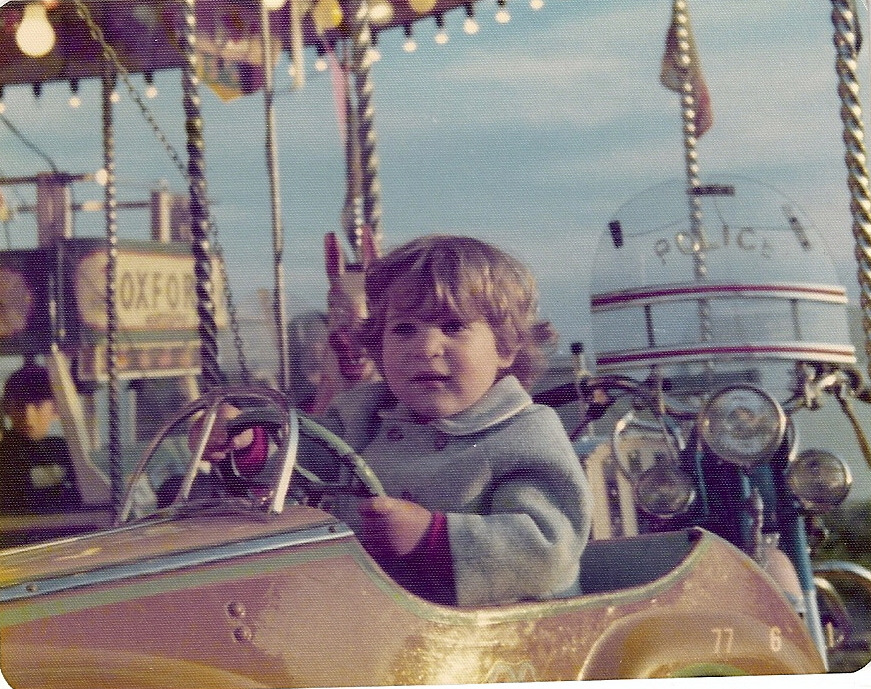
This week, I went to the fair at Brockwell Park. I don’t have a picture of that, but here’s me at another funfair in 1977. I was not a particularly pretty child, nor a thin one, nor one that actually looked all that much like a boy. And what is that coat I’m wearing? But along with a photograph of me and my dad riding the dodgems taken a year later – me marginally cuter, he like the Brummie James Dean – it is one of my favourite images from my youth.
That’s because it was taken at the Epsom Derby funfair, where we went as a family every year. It is almost impossible for an adult to now understand how exciting the funfair is to a small child – the colour and clatter of the rides, the sweet smell of popcorn, onions and candy floss, the sheer thrill of being outside after dark – but this picture brings a lot of that back to me. It’s a pure pleasure, one without any compromises or guilt. By contrast, most grown-up fun tends to come with the feeling that one is doing something one shouldn’t, and will pay for it later, either with a hangover or an empty wallet. Or perhaps that’s just the Catholic in me talking.
When I was a teenager, fairs were still about thrillseeking, just in a different way. There were the rides of course, but now it was more because this was were you went to meet girls (or watch your friends meet girls, or watch your friends talk about how they’d like to meet girls). You also went along in fear/search of some real danger – the possibility of getting chased round the park by the semi-mythical Roundshaw gang, who supposedly spent every evening roaming the borough, looking for people to beat up. Such bifftastic activity has been circumvented by the organisers of the Brockwell Park fair, who have a ‘No Gangs’ notice prominently displayed and a police van on constant vigil. I’m not sure whether this is a good or a bad thing. The parent says ‘good’, the teenager says not.
And it’s as a parent that I take my daughter to the funfair every time it comes to Brockwell Park. That’s partly for her sake, because she loves it so much, but it’s also partly for me, because I want to remember what it’s like to feel this way.
Here she is last week, on a violently orange airplane.
I read an article last week about the dishonesty of most funfairs, how it is impossible to win any prizes and the whole thing is essentially a tiny, tacky, travelling confidence trick. It’s very difficult to visit the fair as an adult and not see the sleaziness. But to a child, unaware that the coconut might be glued to the stand, this is paradise. It is wonderful to witness, but also slightly depressing, because it is impossible to share in the innocence, to see the funfair through an eye unstained by prejudice.
My daughter had more fun at Brockwell Park funfair than I think it is possible for an adult to comprehend, when everything is costed in terms of money and time. I hoped that when I went with her, I’d vicariously absorb some of her glee. And I was happy to see her happy, but I also ended up wallowing in nostalgia and misremembered romance. Is that such a bad thing?
This guy knows what I mean, or at least I used to think he did.
The new issue of Uncut magazine contains my feature about the International Poetry Incarnation, which took place 45 years ago this month on June 11, 1965. It begins like this:
Allen Ginsberg is drunk. Big, bald and bearded, like a Jewish bear stuffed in a suit, the beat poet stands tall in the Royal Albert Hall, London’s sacred haven of the high arts, and proclaims to 7,000 fellow thinkers:
“Fuck me up the asshole”.
In the crowd was Heathcote Williams, the future poet, playwright and artist. Williams recounts what happened next: “A man with a bowler hat, beside himself with anger, shouted out: ‘We want poetry. This is not poetry’, and Ginsberg retorted, looking up towards the gods: ‘I want you to fuck me up the asshole.’”
And it goes on in a similar manner for another 2,400 words. If you think that sounds like fun, head down to your local newsagent now.
The International Poetry Incarnation – which featured Allen Ginsberg, Adrian Mitchell, Gregory Corso and Michael Horovitz – is said to be the moment that signalled the arrival of the 1960s counterculture movement in London. However, in ‘White Heat’, his otherwise splendid history of the 1960s, Dominic Sandbrook writes dismissively: ‘Seven thousand people was indeed an enormous attendance… on the other hand, it was still considerably smaller than the typical crowd for a Second Division football match… to millions of people, the event meant absolutely nothing. What is more, it had not even been a very good reading.’
Oh, really? Watch this extraordinary clip of Adrian Mitchell from Peter Whitehead’s film of the reading, ‘Wholly Communion’, and tell me it has the same impact as Torquay vs Rochdale.






 The Great Wen