Category Archives: Journalism

Pulp in Uncut

I am incredibly fortunate to get to meet and write about people and places that have always fascinated me. This is particularly true when it comes to the musicians whose music I fell in love with as a teenager – I’ve interviewed Suede, Madness, Evan Dando, Paul Weller, Buzzcocks and many, many more, something that was impossible to imagine when I was reading about them in NME and Melody Maker as a kid.

But this month’s Uncut cover story feels particularly special. It’s Pulp.

Pulp always felt like my band. Scott had The Cure, Mike had Teenage Fanclub, the other Pete had Dodgy and I had Pulp. Jarvis Cocker told me that he knows a song is special when he gets a “tingle”. I know what he means, but I don’t actually get the “tingle” very often – although I did the first time I heard “Razzmatazz” (probably on Mark Radcliffe’s Radio One show).

I bought the single. Then I heard “Babies” and fell in love with that. For a while, I bought all their singles on the day of release – right up until “Common People” in fact, when it became very clear they no longer needed my support. Now I didn’t need to buy the single if I wanted to hear Pulp because their music was everywhere. I still bought the albums of course, and This Is Hardcore became one of my favourite albums of the late 90s. I would play it as I went to sleep before getting abruptly awoken by Jarvis’s disembodied “bye bye”, which comes after 15 minutes of silence at the end of “The Day After The Revolution”. It became a tradition.

“The Day After The Revolution” is one of 40 Pulp songs the band chose as their favourites for the Uncut article, so I told Jarvis about my interrupted sleep when I interviewed him – he apologised but I hadn’t really been complaining. I also told him about when I saw Pulp support Blur at Alexandra Palace and he teased the audience by playing the opening notes to “Babies” and then stopping, forcing the crowd to shout for more. He said he didn’t remember doing that – in fact, he admits he couldn’t remember anything about the show – but might reintroduce that intro to the set.

It was, in short, a bit of a dream come true. The other three members of the band – Candida, Mark and Nick – were all lovely and I got to ask them about dozens of my favourite songs, and learn what they meant to the band themselves.

Jarvis also curated a covermount CD of his favourite songs from the Rough Trade label. To my delight, it turns out that one of these is “You Made Me Like It” by the 1990s, a great Glasgow band whose drummer was my best friend Mike, who introduced me to indie music in the first place. That unexpected coincidence made this whole exercise even more special. Isn’t music brilliant?
Time Out – smoking hot and strikes

BBC Archive recently posted a fantastic video about Time Out magazine in 1978.

It’s a fascinating snapshot of London past, from the references to “seedy” King’s Cross and “trendy” Covent Garden to the fact that everybody appears to be smoking, all the time. The broadcast focuses around a couple of interviews with Tony Elliott, the magazine’s handsome founder and proprietor who looks like the lost member of Genesis.

It’s remarkable to think that despite his theoretical control, the magazine’s union was powerful enough to close down publication after Elliott had the temerity of appointing his wife, Janet Street-Porter, as deputy editor. That led to a strike and management climbdown. Another strike took place after the union chapel took offence to the appointment of a new TV editor, John Wyver, as they felt the job should have gone to an internal candidate – one of whom was broadcaster and writer Jonathan Meades.

As this film relates, at this time, almost all Time Out staff – there were a few exceptions – earned the same salary, whether they were editing a section or working as a receptionist. There were also other then groundbreaking initiatives, including mandated sabbaticals and paternity leave (“Do I have to take it?” asked one soon-to-be-father). Many of the staff members featured in this footage, including recently deceased news editor Duncan Campbell, would leave Time Out in 1981 after an extended strike following an ugly dispute regarding this pay arrangement. They went on to form City Limits, while Time Out relaunched and continued to enjoy great success.

Time Out stayed in their Covent Garden office until early 1994. That means that when I first started working there in the summer of 1998 it was still very much the new place, even though it already felt thoroughly lived in. Smoking by then was reserved for the eighth floor, where the entire top floor was given over to a massive smoking area, complete with sofas, daily newspapers and views across the West End. Different times, and great ones.

The magic, mayhem and mystery of Ziggy’s last show

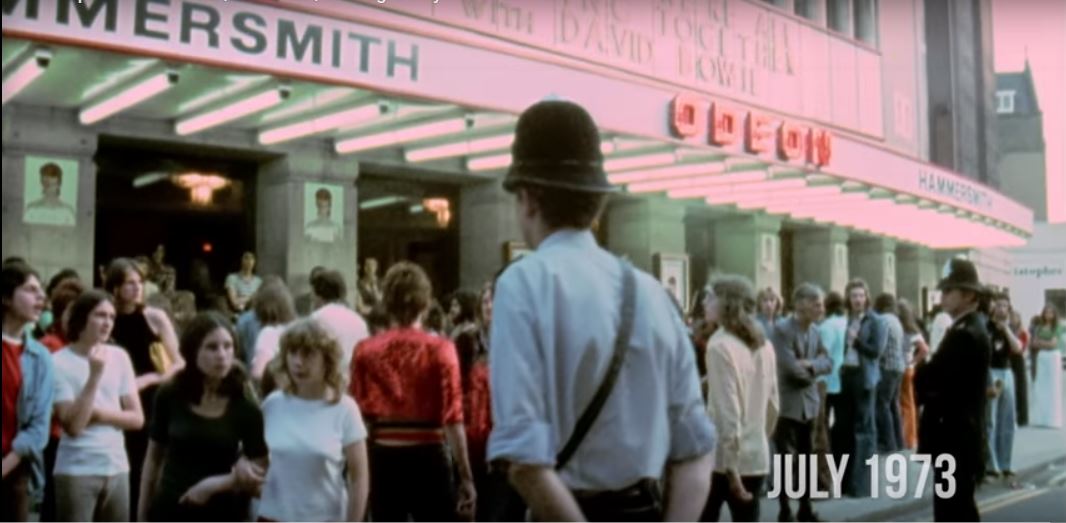
I have a piece in the latest edition of Uncut about the final Ziggy Stardust show at Hammersmith Odeon in July 1973. It’s an oral history, for which I spoke to fans who attended the show as well as the two surviving Spiders, engineer Ken Scott and singer Dana Gillespie. The fans include a largely unimpressed Vic Godard, later to form Subway Sect, an eight-year-old boy from Devon who was smuggled in by his wild-sounding babysitter, a West London tearaway who broke in with his pals through a fire escape, and a teenager from Surrey who is captured on film, open mouthed in shock, after Bowie makes his bombshell “retirement” speech before the final number. “I cried for the rest of the show,” she admitted. “I cried all the way home.”

It was an awful lot of fun chatting to fans about their memories of this momentous show. It was also interesting to speak to Woody Woodmansey and Mike Garson about their very different feelings about the show, Woody having effectively been sacked on stage without knowing anything about it, something Garson clearly has a form of survivors guilt about. Woody never played with Bowie again but he told me they did manage to clear the air later in the decade, and stayed on good terms thereafter.

I also spoke to Lee Grant, a Bowie fan trying to solve a photographic mystery from the evening of the show. That section of the article didn’t make the final cut, so I am including it here.

The after-show party at Café Royale became known as Bowie’s Last Supper and featured a panoply of celebrities, several of whom posed for a famous photograph. This group shot features Mick Ronson, Lulu, Jeff Beck and his girlfriend Celia Hammond, Ringo and Maureen Starr, Edgar Broughton, Bianca Jagger, David Bowie and Angie, plus another individual who has never been identified.

Bowie fan Lee Grant created his Bowie Mystery Guest blog to solve the mystery and has so far discounted Tim Buckley, Elliott Gould, Cat Stephens, Ossie Clark and Bowie’s friend Geoff MacCormack plus several others. He first heard about the mystery guest from a Bowie podcast. “I thought I could solve the problem in about ten minutes and here we are five years later,” he says. “What I tried to do was eliminate some of the main suspects and wait for somebody to come forward.  It’s as simple and pointless that.”

Grant has contacted numerous members of the Bowie circle in his bid to solve the problem – many of whom suggest names he has already been able to eliminate such as MacCormack and Buckley. Having discounted most of the proposed names, Grant’s current theory is that the mystery man is a non-celebrity who happened to be at the Cafe Royale was invited to join the group shot because he was mistaken for MacCormack, who he certainly resembles. That makes identifying him all the harder but not impossible – perhaps with the help of other photographs from the evening which might show who the mystery figure was with.

“I’d love to find out who he was, why he was there and then get on with my life,” he says. “It’s in the back of my head all the time.” If you happen to know the answer, please put Lee out of his misery and let him know at https://bowiesmysteryguest.com.

Riot Grrrl in Uncut

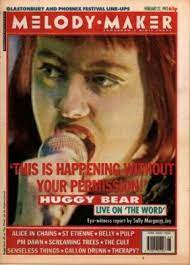
I have a piece about 90s Riot Grrrl band Huggy Bear in the latest Uncut to mark the 30th anniversary of their single, “Her Jazz”. Here’s Huggy Bear performing the song on The Word. Apparently you can see three members of their labelmates Cornershop in the crowd. It’s a thrilling performance and I remember watching it at the time, impressed and slightly scared.

Although I was not a huge Huggy Bear fan – frankly, they intimidated me – I couldn’t miss the fact that in the music press, Huggy Bear got a tough time in a manner that seemed completely out-of-proportion to their actual size. NME and Melody Maker were known for their snark, but the usual targets were the self-important big stars – Bono, Sting, Morrissey – or the current flavour-of-the-month, such as Suede or Manic Street Preachers (a band that have some interesting similarities with Huggy Bear). But for the latter, the nastiness was usually balanced by regular cover features, positive reviews, news pieces and a general boosting of the latest indie hero.

With Huggy Bear – a small band on an indie label whose fan base barely filled a couple of pubs in north London – it seemed like it was all snark. The vitriol was relentless; Huggy Bear were the eternal punchline.

Talking to the band – mostly via email as even after 30 years they were still reluctant to trust a journalist so wanted to retain control of their words – it was clear they’d had experience this as, in one member’s word, “spiteful bullying”. And it wasn’t just the press. Other bands refused to sign to the same label as them, or created such hostility they couldn’t drink in the usual indie haunts in Camden. Some of their peers even went to gigs just to heckle. It was vicious.

What was everybody’s problem? It wasn’t Huggy Bear’s music, it was their politics – and more to the point – the sheer conviction with which they held their views. Huggy Bear believed in the underground community of fanzine culture and DIY gigs, and they believed in – and passionately espoused – gender and sexual equality. They were fierce feminists and that scared the boys. It still does. To care so much was unforgivable in the early 90s, as the affected ennui of Generation X was about to give way to the destructive irony of Britpop and Loaded – an irony, of course, that heavily favoured the views of white men.

After that performance on The Word, there was an interview with a pair of identical twins who modelled for Playboy and proudly declared they were “bimbos”. Huggy Bear and their friends in the crowd heckled, while guest Henry Rollins and presenter Terry Christian smirked awkwardly. Terry Christian is a good guy with sound views but he couldn’t handle being upstaged – on The Word for chrisake, which was explicitly created to manufacture controversy – and had them all thrown out. That earned Huggy Bear an appearance on the cover of Melody Maker. It was not The Word‘s finest hour.

Back then, Huggy Bear were sneered at for being “right on” and “politically correct”, even in the ostensibly left-leaning NME, which regularly carried a column by comedian Simon Munnery based on his Alan Parker, Urban Warrior character, which targeted this tiny but easy-to-mock demographic. Ironically, this terrible column was far more humourless than Huggy Bear themselves, whose songs brim with wit as well as fire and compassion.

These days, that terrible lazy “W” word would be deployed to diminish their opinions.

It must be annoying for them to know that Huggy Bear were right. About pretty much everything.

The Marquee

The first indoor gig I ever want to was at the Marquee in September 1992. I’d already been to a couple of huge outdoor shows that summer – Reading, Madstock – but there was something special about going up town on a weekday to see a gig in a dark, sticky floored venue that stank of fags. It was the Irish band, Sultans Of Ping FC, best known for novelty hit “Where’s Me Jumper”, and I remember very little about the show or the venue for that matter other than the noise, the crush of people and the fact that everybody in the audience was asked to lie on their backs and wave their legs in the air for the final number. Oh, and I lost my watch in the moshpit.

I’m not sure whether I was even aware at the time that this wasn’t “the real” Marquee. That had been located on Wardour Street, whereas the Marquee I went to was at the bottom of Charing Cross Road pretty much opposite Sportspages. It closed a few years later and was turned into a Wetherspoons. The story of the Marquee – which started life underneath a cinema on Oxford Street before moving to Wardour Street – is told in a new book, co-written by Robert Sellers and Nick Pendleton. Nick is the son of Harold and Barbara Pendleton, the founders of the Marquee – and I interviewed Barbara for a piece in the Telegraph.

The Wardour Street Marquee was an extraordinary venue because of Harold and Barbara’s open-minded booking policy. The venue was open every night so there were plenty of slots to fill, which is why so many huge bands got their break at the Marquee – and continued to do so as tastes and genres changed. A lot of club venues become locked into a single scene, or even a single band – think of the Cavern or Eric’s in Liverpool for perfect examples – whereas the Marquee was much more promiscuous. It started with jazz but quickly embraced blues and R&B, before following those threads through to the 80s, taking in psych rock, hard rock, prog, pub rock, punk, new wave, heavy metal, goth, indie and hair metal. Name the leading band from any of these scenes – the Stones, Who, Pink Floyd, Cream, Hendrix, Led Zeppelin, Queen, Yes, King Crimson, Dr Feelgood, Sex Pistols, Wire, The Cure, Iron Maiden, Joy Division, Stone Roses, Guns N Roses – they all played the Marquee. Just about the only important band that didn’t was The Beatles. One of the charms of the book is seeing some of these line-ups and realising that pretty much every week for around 25 years, a legendary bands was on stage at the Marquee.

Playing the Marquee became a rite of passage for bands on the way up, while by the 80s it became the first port of call for many US bands. It was used for filming, and it was also used for secret shows – Bowie, The Stones, The Who, Tom Petty, The Police and loads more used it for warm-ups or special events.

The Pendletons developed parallel businesses, including artist management and promotion. They started an outdoor festival in Richmond that turned into the Reading festival – and for years, Reading was every bit as important as Glastonbury. There was also a studio, where The Moody Blues recorded “Go Now!”, Chelsea FC recorded “Blue Is The Colour” and Killing Joke recorded their debut LP – three of the finest records in anybody’s collection. The Marquee studio was where the Stock Aitken and Waterman team came together, working on Dead Or Alive’s “You Spin Around”, before they left for their own space.

The book goes into this in detail with plenty of great anecdotes about some of the most famous personalities to have played the venue, including Bowie, the Stones, Lemmy, Gilbert & George and Metallica. It’s a great read and an excellent way of understanding what arts and culture can do for a city and how many lives can be touched with memories that never leave them. That’s invaluable, and there are aren’t many places where it still happens in Soho.

The Marquee was revived a couple more times – once in Angel, now the 02, with a consortium that included Dave Stewart – and then back in the West End. The brand’s current owner tells me he does one day hope to reopen a Marquee in Soho, if he can find a willing partner- ie, a landlord prepared to accept their wider responsibility for maintaining the historic culture of an area rather than simply a devotion to their own bottom line. We can all dream, can’t we?

Marquee: Story Of The World’s Greatest Music Venue by Robert Sellers and Nick Pendleton is published by Paradise Road.

House music – David Bowie’s Haddon Hall

The sad death of PiL guitarist Keith Levene sent me back to an old Great Wen blog post, about the flat in World’s End where PiL were formed. John Lydon’s flat on Gunter Grove was located on a busy road, where the noise of passing buses was accompanied by pounding dub music from Lydon’s stereo. Throw in some paranoia, weed, a cat called Satan and a lot of argumentative music-obsessed 20-something men, and you had the formula that produced PiL.

Levene lived here with Lydon and the drummer, Jim Walker. By all accounts, it was intense.

“John and Keith both remind me of Withnail & I, only they are both Withnail,” said Jah Wobble.

Serendipitously, the influence of architecture on music was one theme of my current Uncut cover story, which explores David Bowie’s life in 1971 as he began to write and record Hunky Dory. Bowie wrote most of the album in his ground-floor flat at Haddon Hall, a huge Victorian mansion house backing on to a Beckenham park and golf course. It’s a classic suburban setting – a main road at the front, countryside at the back – while the house itself was really extreme, a gigantic villa surrounded by balconies with a vast stained-glass window overlooking the park. It was built by the Price family, who made candles, and originally named Pettistice.

Bowie’s landlord was a Mr Hoy, the gardener, who is said to have inherited the house out of spite after it was passed to him by the Price family, who wanted to cut a descendent out the will. Hoy charged Bowie rent of around £14 a week.

Bowie lived here with Angie and their baby Zowie (later Duncan), as well as assorted members of the soon-to-be named Spiders From Mars. He filled the house with antiques including a grand piano, on which he began to compose some of the melodies that distinguish Hunky Dory, such as “Changes” and Eight-Line Poem”. It was a great place to entertain, and visitors included fellow musicians like Roy Harper and Marc Bolan.

The chief feature of the house was a huge staircase, which greeted visitors as soon as they stepped through the door. In this old picture from the Price days, it looks like something from a National Trust property.

The architecture of the house – its grandeur, its follies, its faded over-the-top decor, its location – found its way into Hunky Dory, a very English album with a distinct personality that oscillates between domestic, internal concerns and sweeping drama.

“The house was very theatrical and grand,” Geoff MacCormack, Bowie’s old school friend, told me. “That created a certain energy to the creativity, this huge staircase with balconies on each side – the ultimate staircase to descend or ascend. It was the perfect venue to have big ideas in. It counts, all that stuff, it counts.”

Angie Bowie described it thus: “As you might expect, Haddon Hall is a thoroughly Victorian edifice: solid red brick, ornately embellished with solemn white fasciae, and of course righteously, haughtily church like in basic aspect, so much so that the dominant feature of the rear face is a huge stained-glass window. The front is almost as imposing. The door opens, and the first thing you see is that magnificent stained-glass window rising above a short staircase at the far end of a central hallway fully forty feet wide by sixty feet long.”

It made me think of other London houses that informed the sound of an album, such as Kate Bush’s 400-year-old family home nearby in Kent.

Sadly, Haddon Hall no longer exists. Already in poor condition, it was demolished and replaced by some very boring looking flats. I spoke to a current resident, who knew about the Bowie connection. “Hard to imagine now,” he said, shaking his head in wonder.

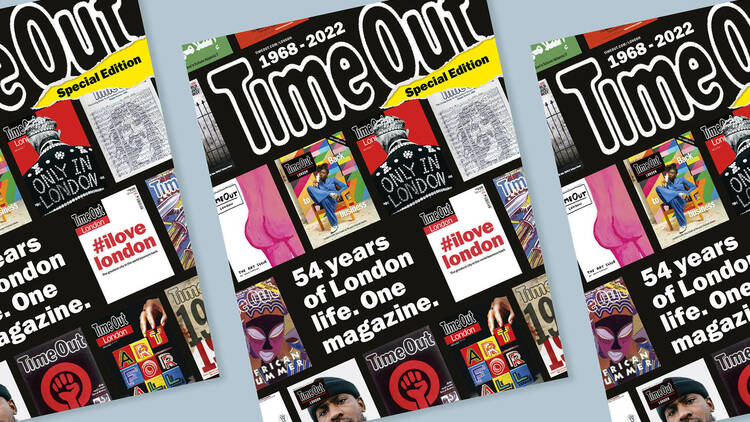
Time Out special edition

Time Out ceased publication – in physical terms at least – a few weeks ago. However, there is a special one-off final issue on the street today, which looks at the history of London over the past 54 years through the prism of the magazine.

I feel very privileged to have been part of Time Out’s story, so was delighted to be asked to contribute to this issue.

It’s a real souvenir edition, so grab one if you can. You can also access it online here.

There was only one Tony Elliott

When I started freelancing at Time Out in 1998, originally on sport and then with the TV section, I often sat on the “Channel 5/cabsat desk” – the desk for the journalist appointed to review the best Channel 5 and cable & satellite programmes of the forthcoming week (yes, we were so flush we had reporters for each channel,, even C5).

The desk was close to the office photocopier, which was frequently used by a young-looking old man – I mean, he was at least 50 – invariably attired in jeans and a paisley shirt. This chap would engage me in conversation – not unusual in the friendly Time Out office I was beginning to realise – and he usually had an opinion on something I had reviewed. This was more surprising given I was only writing about Channel 5, was an infrequent freelancer and reviewers were identified only by their initials.

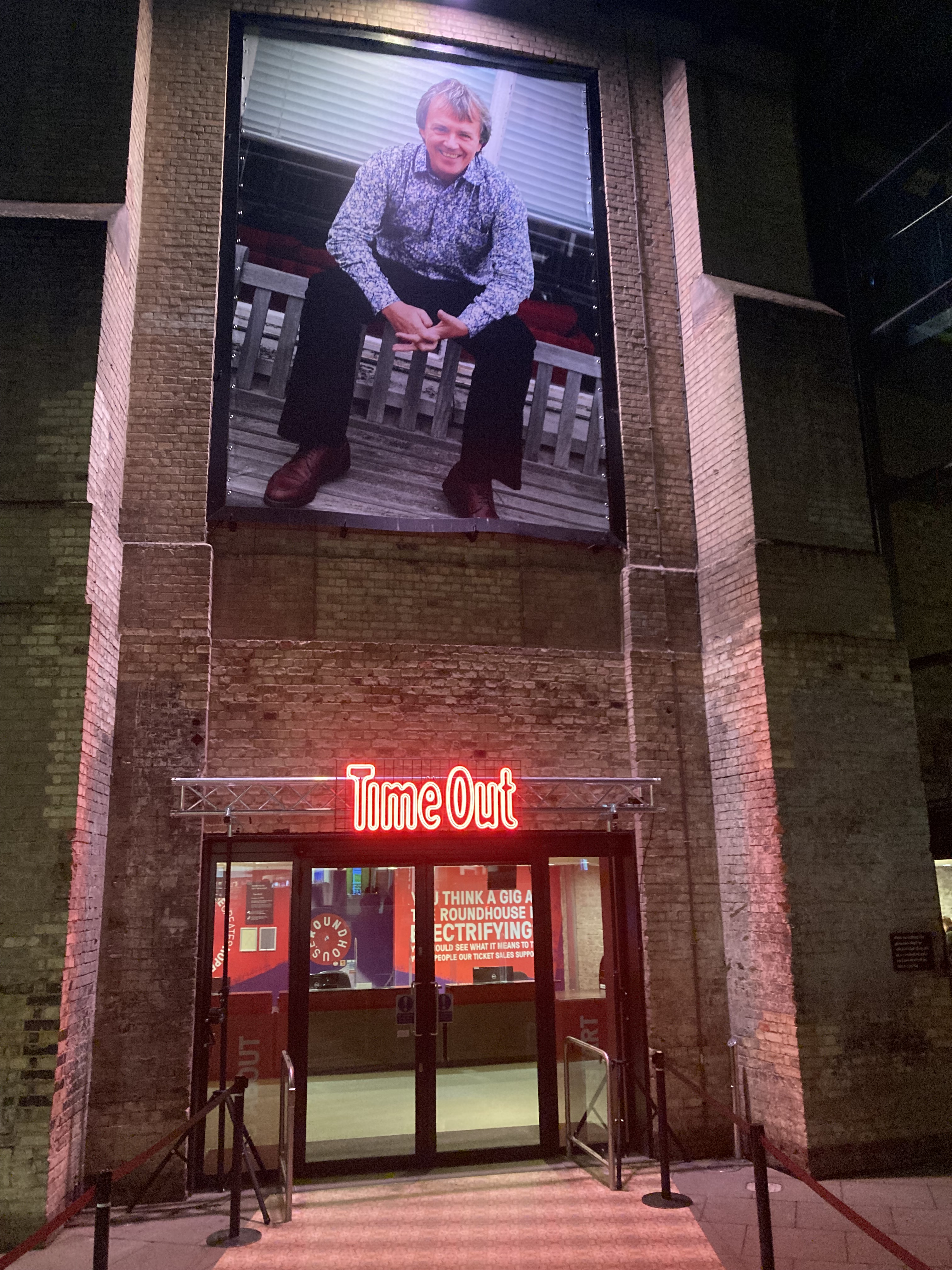
I’m not sure precisely when I worked out this was Tony Elliott, founder and owner of Time Out, but it’s safe to say that Tony knew who I was long before I recognised him. Tony seemed to read every single word – and remember each initialed byline – of every magazine and was then happy to discuss your review of Hitler’s Secret Pets, even when you had no idea who he was. Coming from The Sunday Times, where I’d never met the editor let alone the owner, it was a bit of a shock but I soon learnt to roll with it, and it helps explain why there was so much emotion and, yes, love in the room at the Roundhouse on Monday evening when 800 people attended Tony’s memorial service. We all had an experience like that, and it shaped who we were.

Tony died in July 2020 and the memorial event celebrated a wonderful life, kicking off with a speech from Alan Yentob and including reminiscences from significant figures in media and business as well as former colleagues and friends. Several talked about being part of the “Time Out family”, which seems a bit soppy when I write it down but which in that moment, surrounded by former colleagues – including those who had worked at Time Out longer before I started or long after I had left – it made a lot of sense. Others said that Time Out was the best place they had ever worked, the happiest time in their careers. That’s partly because we were young and excitable with unprecedented access to an entire city through our free travel cards and ability to get on any press list – but it’s also because of that welcoming spirit that came from the very top. Time Out wasn’t shangri-la but it had a culture that was intoxicating.

Right at the end of my Time Out career, when I was no longer such a happy member of the family, Tony sought me out to recommend I meet this guy, a bookseller, he knew. He kept on at me so much that eventually I acquiesced – something that ultimately led to one of the most fascinating projects of my career, writing a book about a billionaire who amassed the world’s largest private library devoted to altered states of consciousness. Tony wasn’t doing this with any particular outcome in mind, he just thought me and Carl would get along so went out of his way to make it happen. That was his gift and a microcosm of what he did with Time Out – opening up first London and then the world to as many people as wanted access to it. What you did after that was down to you.

After the Roundhouse, still reeling from all the old friends I had encountered, I was chatting to a lawyer who worked for Time Out during Tony’s long battle to democratise TV listings. This was discussed during the memorial service and the lawyer confirmed all the details in more colourful language. Basically, in the 1980s, the BBC published their listings in the Radio Times and ITV published theirs in TV Times. This was a cartel of information suppression that represented everything Time Out and Tony stood against. Time Out was all about opening things up, allowing Londoners to know about every nightclub or cafe or poetry reading or korfball match – the 24-hour city for everybody. TV listings was just another aspect of this philosophy.

Time Out won their battle but first they were given a unique opportunity – Time Out and Time Out alone could print complete TV listings, a privilege that would not be extended to other publications. For the lawyer, this was the best possible result. It would give Time Out a legal victory and a massive competitive advantage. He urged Tony to accept but Tony refused. He believed everybody deserved the same access. Within 18 months, the Guardian launched their own Time Out-style Guide based on their TV listings, and soon everybody was doing it. Time Out’s circulation began a slow decline.

Back in the early 2000s, some of us would, in idle moments, compare Tony to Richard Branson, another figure who emerged from the counterculture to create a business empire – and who delivered a nice video tribute at Tony’s memorial. But Tony Elliott’s empire was never anywhere near as powerful as Virgin something that we then saw as a flaw – Tony was basically a bit of a control freak who couldn’t move on. But now it’s pretty obvious that the flaw was simply one of principle. You could never imagine Branson making that same decision when it came to TV listings because he simply didn’t have the same desired outcome. He would have placed the profit imperative over principle every time. That’s fine, but there are already enough Richard Bransons in the world. There was only one Tony Elliott.

Third generation rock and roll

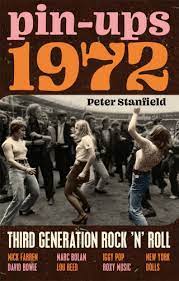
That headline is not a phrase you hear much of – or in fact at all – these days, but in 1972 it was a much-discussed concept that attempted to define the music and performance of the early 70s as demonstrated by the likes of David Bowie, Alice Cooper, Roxy Music, New York Dolls and T-Rex. As author Peter Stanfield explains in his fabulous new book Pin-Ups 1972 about the London music scene in 1972, this went by other names too – Fag Rock and Poof Rock being just two of them – which is a reminder of how insensitive even the progressive rock papers of the time could be.

That distance between then and now is the focus of Stanfield’s book. So much has been said and written about the 1970s that it’s easy to believe we all lived through them and already understand everything there is to know, but by going back to the journalism of the time, Stanfield demonstrates how writers were attempting to comprehend the music of the time without benefit of hindsight or obscured by four decades of received wisdom. Stanfield has devoured the journalism of 1972 – underground, national press, music weeklies, colour monthlies, even soft porn titles – to examine the music through a detailed reading of the writing of Nick Kent, Nik Cohn, Richard Williams, Michael Watts, Simon Frith, Mick Farren, Chrissie Hynde and many more – not just their greatest hits, but deep cuts that even they will have forgotten writing.

We see these writers in real time try to get to grips with the ambiguities and contradictions of third generation rock and Stanfield writes in an approximation of these pioneers, dropping theories, connections and cultural references with intoxicating verve, daring the reader to keep up and learn something. Look it up or go with the flow, your call.

What is third generation rock? By this reading, the first generation were the original ’56 rockers – Elvis, Chuck Berry, Little Richard – and the second generation were those that grew from R&B – the Beatles, Stones, Who, Kinks, Floyd, Zeppelin and you know the rest. Third generation were those that followed, essentially the ones who had more time to understand the grammar, scriptures, cliches and language of rock and roll and then tried to do something different with it – even if many of them, Bowie, Bolan, Lou Reed, Iggy Pop for starters, had been making music for almost as long as the second generation.

It’s a slippery concept (whither Hawkwind and the Pink Fairies?), as such genre-defining often is, but that isn’t really the point. What compels is the approach of exploring the acts through the media of the time. We see hippie journalists struggle to accept the sudden elevation of Marc Bolan from underground hero to teenage fantasy, haphazardly chronicle the New York Dolls’ ill-fated trip to London in 72, or write in awe of the arrival of the semi-mythical Iggy Pop and Lou Reed when the pair come and live in London (Lou Reed settling down in Wimbledon of all places). How do you make sense of Bowie and Roxy Music, when they are happening right in front of your eyes and you have no real frame of reference? The latter explains why for much of their first year, Roxy are likened to Sha Na Na: when something genuinely revolutionary happens, critics are left grasping for comparisons – only later are they able to go back and make it all fit together. But watching that struggle, and the sheer intellectual effort demonstrated by so many writers of the time, is fascinating and a little humbling. The through-line to punk and indie is clear to us but obviously was unknown at the time, and despite walk-on roles for Malcolm McLaren and Glen Matlock, Stanfield wisely leaves that largely unsaid, helping to seal 1972 into its own time capsule.

That makes this very much a book for those who enjoy historiography and media studies almost as much as they love rock and roll. What you don’t get is recycled anecdotes, biography or even too much in the way of music criticism – although the reappraisal of Bowie’s Pin-Ups is magnificent. Stanfield is more interested in the wider culture, with rock being as much about performance and publicity and fandom as it is about chords and melodies. Which for the writers and musicians of 1972, it almost certainly was.

http://www.reaktionbooks.co.uk/display.asp?ISB=9781789145656

Kate Bush’s guide to South East London

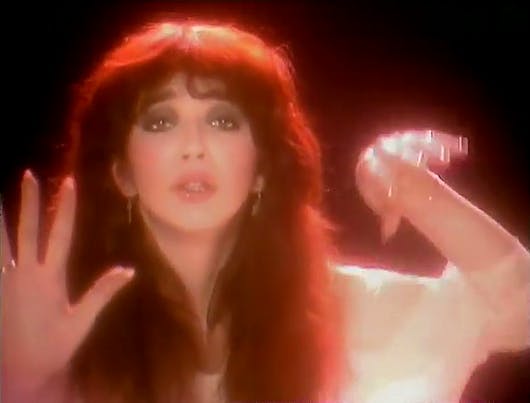
I have written the cover story for the current issue of Uncut about Welling’s greatest daughter, Kate Bush.

The piece looks at Bush’s formative years from her first musical compositions to the release of her debut single, “Wuthering Heights”, which must be one of the most surprising and memorable debut songs ever released.

KB

Much of this story takes place around south-east London, where Kate Bush was raised. She grew up in a rambling old farmhouse in Welling that many interviewees think influenced her idiosyncratic outlook.

“The house when it was built would have been in the countryside,” Joe Boyd told me. “By the time Kate was growing up it was suburbia, but right on the edge with fields out the back. There are barns and stables and horses. It does feel as if her upbringing gave her one foot in both new and old, and I know she really valued that place and what it gave her. It’s one of those old London houses that have somehow never been demolished, where you can squint and imagine the past.” Boyd likened it to an old Georgian mansion that survives in Notting Hill, somehow having avoided redevelopment and now a portal to another history. I told him it sounded like Brixton Windmill, and Boyd told me of a spell he spent in Brixton prison in the 1960s, on remand for possession. The windmill, he said, became his beacon of hope.

When Bush left home, she continued to stay close to her family living in the top floor of a Victorian house in Brockley – her two older brothers occupied the two flats below. It was in SE London that she first rehearsed and performed with the (still performing) KT Bush Band, touring the London pub scene. Here she is performing “Come Together”, one of the few recordings that survive from this period.

Anyway, here are some of the key locations from this part of Bush’s life. For more, you’ll have to buy the magazine.

KATE BUSH GUIDE TO SOUTH-EAST LONDON

East Wickham Farm, Wickham Road, Welling

The Bush family homestead, parts of which are more than 400 years old. The farmhouse remains in family ownership today.


St Joseph’s Convent Grammar School, Woolwich Road, Abbey Wood

Bush’s school, which she attended until 1976 getting 10 O Levels. She wrote poems for the school magazine, including “The Crucifixion”, “Blind Joe Death” and “Epitaph For A Rodent”.


44 Wickham Road, Brockley

The Bush family bought this house and installed the three Bush siblings in flats on each floor. It was where Bush would perfect the songs that appeared on The Kick Inside.


Greenwich Swimming Baths, Trafalgar Road

In a room next to the boiler room, the KT Bush Band held their first rehearsal ahead of their short life touring London pubs, clubs and hotels.


Rose Of Lee, 162 Lee High Road, Lewisham

Scene of the debut KT Bush Band show in March 1977 in front of an audience of around 30. Crowds would grow over the next few weeks as the band returned.


South East London Entertainment, Rushey Green

Musical equipment shop where the KT Bush Band bought PA equipment with money provided by EMI. They also bought mics from Fender Soundhouse in Soho.