Category Archives: Journalism

I should be so lucky: blackmailed by a poet

My interview with the writer Michael Horovitz appeared in the Times on Saturday. You can read it here.

This piece had a curious gestation. I contacted Michael in December as part of my ongoing attempts to track down a lost London counterculture magazine of the 1970s to which Michael had contributed.

I asked him to help, and he said he would, but only if I first wrote a feature about him based on the many anniversaries he was about to celebrate, including his own 75th birthday. It was blackmail, but of the nicest sort because Horovitz is an extraordinary figure, who I had great fun interviewing and writing about.  He also has a fridge packed with some of the most delightful cupcakes I have tasted in years (and I have tasted a lot of cupcakes). The piece then proved to be a surprisingly easy sell to the Times and has directly led to a couple of other pieces that are now in the pipeline. To all of which, I say ‘Hurrah!’

Michael has worked with artists and writers as distinct as William Burroughs, Paul McCartney, Lenny Bruce, Dudley Moore, Spike Milligan, Joe Strummer, David Hockney, Peter Blake, Allen Ginsberg and Patti Smith, and of his many achievements, the one I sadly didn’t get space to write about in the Times was the part he played in the unexpected cultural renaissance of Kylie Minogue.

It was at one of Michael’s Poetry Olympics events at the Royal Albert Hall in 1996 that Kylie first shook off her Stock, Aitken and Waterman pop image when she performed a tongue-in-cheek spoken word version of ‘I Should Be So Lucky’. ‘Indie Kylie’, the NME star, was born.

Michael currently has an exhibition of his paintings on display at Art@42 in Notting Hill Gate until the end of April, and a documentary about his life was broadcast on Sunday on BBC Radio 4, which you can listen to here.

Improving Standard: the return of Andrew Martin

One of the delights for me about the improving Evening Standard has been the return of old hand Andrew Martin, with his unorthodox but smart tales from the underground, now called Man On The Tube (and only intermittently available online).

This used to be called Tube Talk and was my favourite feature of the old ES magazine in the late-90s when that mag was a great supplement. Martin’s column was the chief influence behind my own bus column at Time Out, where I endeavoured to catch every London bus in numerical order and write about the journey each week.

Martin had this knack of finding fascinating weekly stories about the Tube (something Annie Mole has been doing for the last few years), and writing them up with wit and skill. He’s a fantastic writer and a real London enthusiast; it’s great to have him back.

Patronising email of the month

‘Hi Peter, You’re a fine reporter and writer, but I’m afraid you don’t (yet) have the track record we require. Meanwhile, you’re on to a great story, and I wish you all the best in pitching it to another publication.’

Gee, thanks.

Don McCullin’s London

Actual paid journalism alert, with this review I did for the Independent On Sunday about the Don McCullin exhibition at the Imperial War Museum North. McCullin is probably the world’s greatest photographer.

Although it takes place in Manchester and only comes to the London branch of the IWM next year, Londoners should check it out if they get a chance as there are a number of great London photographs featured. McCullin was born in Finsbury Park and says in the accompanying book, ‘Shaped By War’ ‘like all my generation in London, I am a product of Hitler. I was born in the thirties and bombed in the forties.’ 

McCullin  is an engaging writer. Finsbury Park, we are told, ‘oozed poverty, bigotry and all kinds of hatred and violence. It was preparing me for something I didn’t know was coming.’

His breakthrough photograph was this evocative London image. It shows seven of McCullin’s schoolfriends, moody young thugs from the Seven Sisters Road posing in a bombed-out house opposite the Rainbow in Finsbury Park. One of them later killed a policeman. McCullin sold the snap to the Observer and his career began.

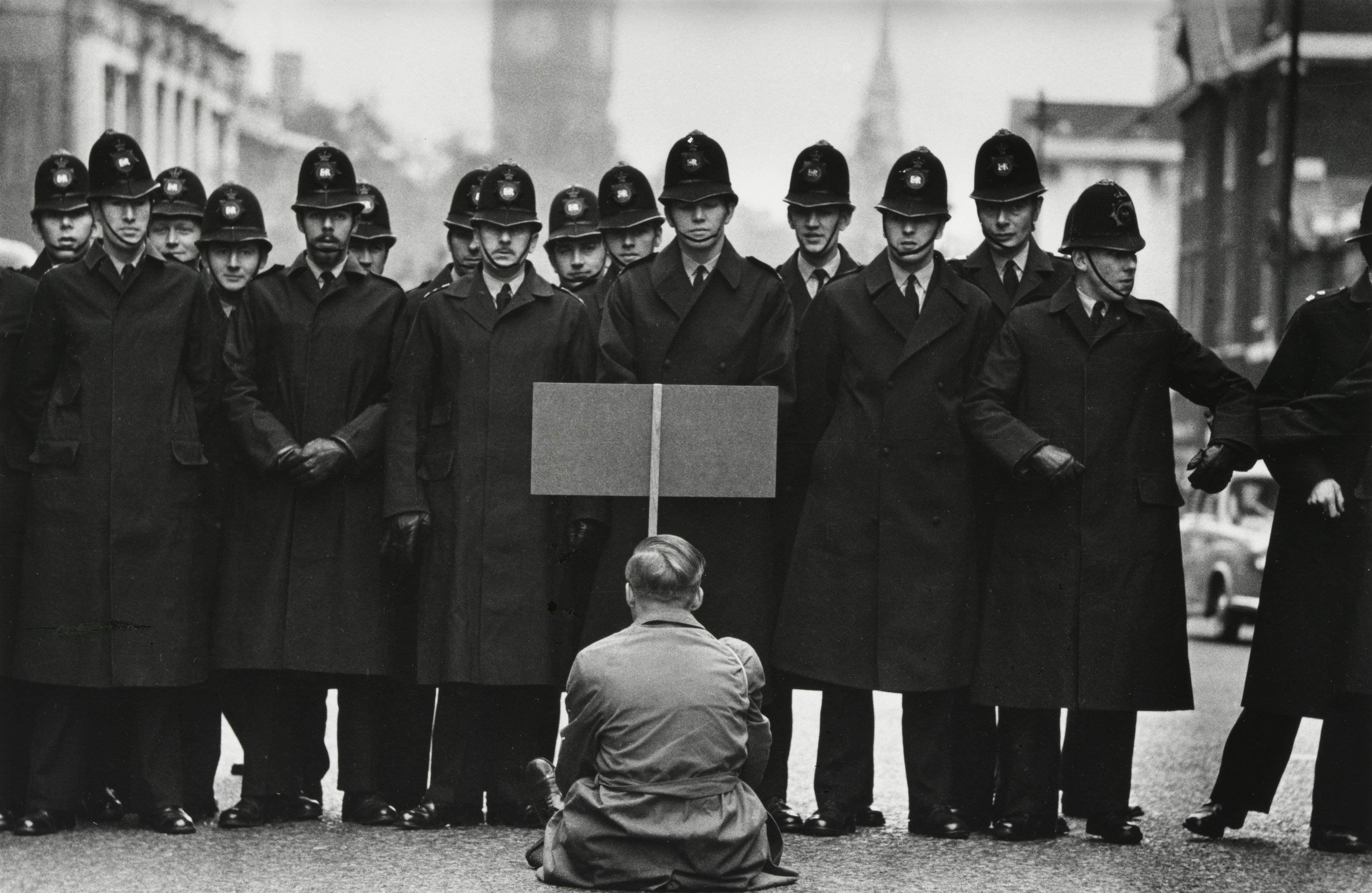
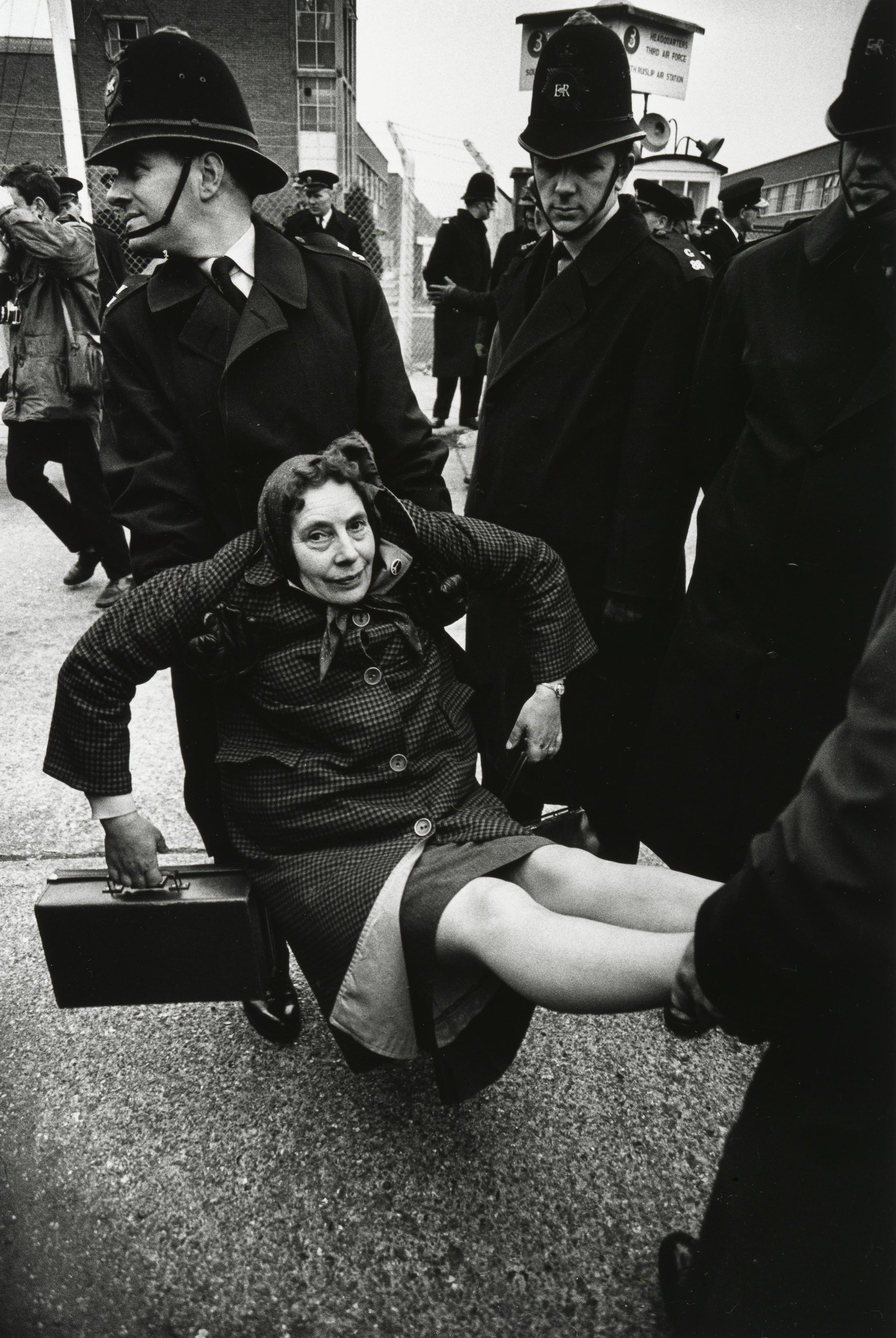
Although war became his arena, McCullin also took extraordinary domestic photographs. Here, those two worlds collide with two photographs of anti-war demonstrations in London from the 1960s.

Also on display is a brilliant photo of a newly arrived West Indian, dapper and outwardly confident, in north London from 1958. At the exhibition, you can compare this with a picture of two assertive young Asian Londoners in Brick Lane taken in 2007. So much change, but so much stays the same.

Understandably, there is nothing in the exhibition about McCullin’s work with the London homeless in 1989. On this subject, there is this remarkable image by McCullin taken in Spitafields in the 1960s. It’s like a still from ‘The London Nobody Knows’ crossed with a painting by Francis Bacon.

'It was never meant to be a lifetime commitment': An interview with Peter Tatchell


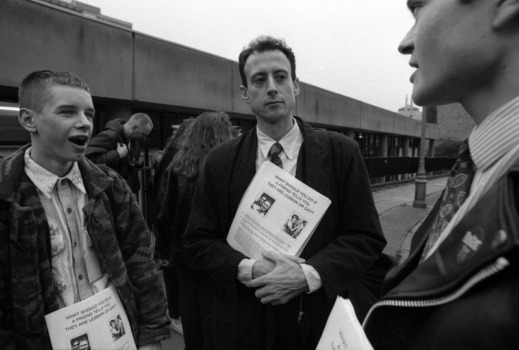
I interviewed Peter Tatchell at his house in 2008 for a piece that was intended to be the first in a series on Living London Legends but never ran. It seemed appropriate to reproduce it now in LGBT History Month. The picture is courtesy of Ralph Erle (www.ralpherlephotography.co.uk).

Peter Tatchell speaks with frightening precision. It’s the style of a man who has spent half his life being misquoted and the rest composing press releases. ‘In 1988 I organised the world’s first AIDS and human rights conferences to coincide with the World Health Organisation summit,’ he says, before the self-editing begins. ‘The pressure we exerted resulted in it adopting a declaration…  unexpectedly and unscheduled… unexpectedly adopting an unscheduled… unexpectedly adopting a previously unscheduled declaration condemning discrimination against people with HIV.’

Tatchell works as hard at getting his message across as he does at getting it right. He’s been doing this for years – ’40 years an unpaid human rights activist’, he says. ‘Yes, it is a big commitment and that’s why I’m still living in the same one-bedroom council flat in Elephant and Castle.’ Tatchell’s office is his lounge, a living space reduced by two bicycles (‘very bourgeois’) and piles of literature on human rights. On the walls are large cork noticeboards covered in leaflets and badges: ‘Whores Against Wars’, ‘Rockingham Against Racism’, ‘Lesbians Support The Miners’: niche, witty, passionate. If you planned an exhibition about half a century of human rights activism in London, it would end up looking a lot like Peter Tatchell’s living room. Indeed, some of Tatchell’s personal history is loaned to Manchester’s People’s History Museum.

But Tatchell isn’t so much of a martyr that he likes it this way. ‘The idea of being on 60k, having an office and a dozen staff is very attractive,’ he says. ‘I can’t get the funding. I’m regarded as too much of a maverick because I work both inside and outside the system. I will lobby government ministers, but I’ll also arrest presidents in the street.’

Tatchell’s devotion to human rights began as a 16-year-old in Melbourne in 1967, with the case of Ronald Ryan, an Australian prisoner who faced the death penalty when he was accused of killing a warden during an escape attempt. Tatchell mounted a passionate defence of Ryan, graffitiing walls and writing to the press. His parents were horrified.

‘My friends and family thought I was crazy. My father denounced me for defending a murderer; my mother was a bit more understanding but didn’t believe the government would send an innocent man to the gallows.’

Tatchell had been brought up in a strict Baptist household and even taught at Sunday School as a teenager, but he developed a different understanding of religion to his family.

‘My parents had no social dimension to their beliefs whatsoever. For them, Christianity was a personal matter – they never related it to issues of social justice. But I connected with Martin Luther King’s idea that Christianity was about not just how we behave personally with other individuals but how society was organised. I saw Christianity as an instrument for human and social liberation. My parents always taught me “Stand up for what you believe”. I gave up my religious beliefs at 19, but it influenced my politics and commitment to challenge oppression.’

Tatchell realised he was gay when he was 17. Homosexuality was still illegal in Australia. ‘You could be jailed and forced to undergo psychiatric treatment to ‘cure’ your homosexuality. There were no gay organisations at all, not even any switchboards or counselling services. There weren’t even any clubs, all you had was a couple of seedy bars. Most people met each other on cruising areas, which were very dangerous.’

Tatchell wanted to change that and again utilised his zeal for campaigning. He wrote letters to newspapers, initially anonymously but later under his name, and urged friends to help him set up an orginisation for gay rights. ‘They were too afraid,’ he recalls. ‘They said: “You’re crazy!You’ll get us all arrested and locked in jail, go away you stupid young boy.”‘

So he did, fleeing to London to escape the Vietnam draft. ‘It was only my intention to stay until there was an amnesty,’ he says, ‘but when I got here the Gay Liberation Front (GLF) had just been set up, I fell in love, got a good job, a nice flat – a temporary stay became permanent.’

On his second day in London, Tatchell saw a lamppost sticker advertising a GLF meeting. ‘So within a few days I attended a meeting and within a month organised my first protests.’ Already a veteran of direct action, he was ‘aghast’ at how supine the British protest movement was. ‘Australia was much more radical than Britain. Britain was pathetic,’ he says. ‘I was expecting direct action, civil disobedience, blocking of military installations – the sort of stuff we did in Australia. Even the quite radical Brits thought I was rather extreme and ran a mile at anything provocative.’

Under Tatchell’s influence, that changed. The GLF arranged sit-ins at pubs that refused to serve gays and lesbians; ‘zapped’ Professor Hans Eysenck, who adocated electric shock aversion therapy for homosexuals; and invaded Foyle’s on Charing Cross Road for selling books that the GLF considered to be homophobic.

‘It felt like being part of a revolution,’ recalls Tatchell. ‘Our slogan was “Gay is good” and those three words turned on their head everything people thought was true about gay people, that we were mad, bad and very, very sad. We were challenging the homophobia of millennia. The GLF were the first time in British history that thousands of people came out and marched to demand their liberation. We wanted to transform the laws, institutions and values of the whole society to liberate everyone, gay and straight, from sexophobic and puritan oppression.’

Unfortunately, many on the ‘non-aligned revolutionary left’ did not want to be liberated by homosexuals. ‘The vast majority of the left, particularly the Communists and Trotskyites, were viciously hostile to gay people,’ says Tatchell. ‘They denounced us as bourgeois degenerates and we were physically attacked.’

This partly changed in 1973, when Tatchell staged a one-man gay rights protest in East Berlin that ended with him getting interrogated by the Stasi and the bravery of which went some way towards challenging the homophobic mindset of the left. Similarly, his attempt to arrest Robert Mugabe in 1999 – ‘he was like a frightened 10-year-old boy’ – helped gain the respect of a right-wing establishment who had previously denounced him as a ‘homosexual terrorist’. The Telegraph  even recently suggested he should be given a medal.

Tatchell studied at the Polytechnic of North London and worked as a store designer. He lived in various parts of London and spent a year travelling, before settling in south London where he worked with the homeless of Waterloo and joined the Labour party. ‘Quite a few people were surprised. Alarmed! What motivated me to join was the rise of the left within the party and the moves to make it more democratic and accountable to grass roots members.’

Tatchell took his policy of direct action into party politics when he was elected secretary of the Bermondsey Labour party in 1981. One campaign saw him occupy HMS Belfast in protest at plans to build office blocks along the river front. ‘We bought a group concession in the name of the East Dulwich Tennis Club,’ he recalls, ‘and then strung huge banners from the bridge.’

Tatchell had more or less abandoned gay politics by this time, but he returned to the cause in the wake of the hugely controversial Bermondsey by-election. He says the ‘unwritten story about the Bermondsey by-election is that I was standing up against property developers for local working class communities.’ During it he was subject to homophobic abuse, much of it personal. 

‘I came to symbolise the battle in the Labour party between left and right,’ he says. ‘Those who wanted to manage capitalism and those who wanted to redistribute wealth and power. There was also the pure unvarnished homophobia of some people who didn’t like gay people and thought we were perverted and revolting. Those are the three things that came together.’

After Bermondsey, Tatchell realised that homophobic prejudice was far more widespread and vicious than he had realised. ‘That’s why I decided to put most of my energy into challenging homophobia. I had no idea it was a lifetime commitment.’

Tatchell argues that ‘women and gay people are the litmus test of whether a society is democratic and respecting human rights. We are the canaries in the mine’ and his commitment to gay rights still leads him into regular confrontations with theoretical allies as much as homophobic enemies. ‘Some on the left have savagely attacked me for pointing out oppression within minority communities,’ he says of recent run-ins concerning Islamic fundamentalists. ‘But I am defending women and gay people within those communities who have the same entitlement to human rights as the rest of us. If I ignored their suffering – that would be racist.’

Tatchell’s chosen way of life is one guaranteed to bring disappointed such are the forces stacked against him. ‘Yes, it induces a certain pessimism, but that is countered by the optimism that comes from a successful result. Somebody once described me as the patron saint of lost causes but often I manage to turn round lost causes and win them. That’s what keeps me going. my enthusiasm and inspiration comes from the many successes I’ ve had in helping individuals and contributing to successful campaigns. I’ve helped secure asylum for lots of genuine refugees and prisoners who are unjustly incarcerated – to see their joy is what keeps me going.’

London’s floating world

When I first moved to London in 1996 I lived on a boat. This is one of a number of articles I’ve written about this experience. It appeared in ‘Talk Of The Town’, the Independent On Sunday’s short-lived New Yorker-style supplement, on April 20, 2003.

Heading north from the Surrey suburbs, the back seat of my dad’s car stacked with clothes, books and CDs, it all seemed straightforward. I was a boat sitter, pure and simple, looking after a canal boat moored in Lisson Grove (where was that? Who cared?) for a couple of months, just the summer, while I waited for something better, something drier to come along. It was a foothold into London life, but no more. I certainly wouldn’t be there for long.

That was seven years ago. This summer, I’ll finally be packing up my bric-a-brac, much of it the same in fact, and heading back south over the water, back to dry land. Boat life is over; while it lasted, it was everything.

In the summer of 1996, Dazzler was – is, the old girl still exists after all – a small, slapdash, cosy vessel, ineptly painted in green and red and just 23 feet from bow to stern. But inside was everything that young man, newly freed from home, would ever need. TV, fridge, oven, shower, toilet, double bed and an 0171 telephone number; Camden was a mile in one direction, Notting Hill a mile in the other and the West End just a short trek south. Idyllic.

The mooring itself was ludicrously unattractive, a slab of urban ugliness slapped between the twin charms of Regent’s Park and picture perfect Little Venice (‘Do you live in Little Venice?’ people would ask. ‘Not quite,’ I’d reply). On one side of the ragged and uneven towpath, weeds spilling through the cracks, was a huge brown-brick electrical substation that, we would proudly boast, had once been a target for IRA bombers. Periodically, it would let forth a monstrous, shuddering belch as it poured electricity through the wires that ran along the road at the top of the towpath. On the other side was a massive, grey, sprawling council estate, built upon the site of an old schoolyard and now home to lairy kids who, every school holiday without fail, would pelt our pretty, targetable boats with bricks and bottles. ‘A narrowboat? It must be so peaceful,’ people would ask. ‘Not quite,’ I’d reply.

At first, my fellow boaters were an intimidating lot. They’d gather by the largest boat, so big it was moored parallel with the towpath rather than sticking out into the canal as the others were. It was a long, hot summer and the crowds would stand at the nearby barbecue drinking, chatting and laughing, everybody brown and weathered, with hands and torsos lined by ropes and engines the hard outdoors. They’d fall silent as I, pasty pale and thin with unmarked skin, scurried past. One or two would maybe nod in vague recognition. ‘New lad, Dazzler,’ the whispered explanation would follow me aboard, where I would shut the curtains and turn up the music to drown out the carousing that lasted long into the night.

It was thanks to my next-door neighbour that I broke through and become an honorary boater. She was my age, bright, attractive, posh and loud. Great fun. A bit loopy. A powerful personality, she forced her friendship upon me, and me upon my neighbours. I learnt who they were: the actors, perennially resting, the couriers, students, bankrupts, welders, writers, dossers and drinkers; riff-raff, drifters from the acceptable fringes of society. Once a year this patchwork neighbourhood would, in its entirety, up moorings and take their boats round the London ring, from Paddington to Limehouse, Limehouse to Brentford, Brentford to Paddington. Friends and neighbours waving to each other and taking photographs as they floated past the Houses of Parliament.

Nights on the ring, like nights on the towpath, would be fabulous social affairs. Barbecues would last all summer long. Sometimes, you’d be on your way home, or heading out, on a Friday night and be asked to stop and have a drink with one of the gossipy groups that would inevitably congregate along the towpath at the first sight of sunshine. Bottle followed bottle and so Friday would slip into Saturday and Saturday would become Sunday. Lazy, warm and indolent. Before long, I came to recognise another pattern: one of new arrivals. Although I felt it had taken me an age to be accepted I soon realised that it had happened practically overnight. So it was with others. You’d meet them briefly one weekend; a week later they’d be taking to your old friends as if they were their old friends. Also routine was the way I’d been dragged in – renting for a few months and staying for a few years. Fresh faces – passing friends or overnight guests – would still be there weeks, months, years later, joining the throng round the barbecue, laughing at joggers and in turn scrutinising new faces. It had that appeal, that attraction for a certain kind of person.

Time passes and things change and London’s creeping gentrification is difficult for even this hardbitten community to avoid. A new breed cottoned on to our secret life. ‘But boats in central London must be very expensive?’ people would ask. ‘Not quite,’ I’d reply.

Boaters realised that the floating houses they owned were fetching London property-market rates. Drifters by nature, they moved on and away, to other ways of life, to other moorings in other parts of the country. Having appeared abruptly, they faded away, appearing less and less often, their places taken by bankers and accountants and managers and assorted nine-to-fivers. Or so it seems.

Some remain, those who make a living of the boats and off the new green boaters, still gathering in ever-decreasing to chuckle about the newbies and exchange news about old friends. Stories are swapped. Of Pump-Out Mick, who sold a boat and disappeared, they said, when he was told he had months to live. Of the bon vivant banker turned vicar, who married my next-door neighbour and took their boat to Cambridge. Of Irish Eddie, whose wife would return from work to measure his humour by the amount of wine he’d consumed – ‘so it’s been a tw0-bottle lunch has it Eddie?’ she’d say if he was being particularly gregarious. Of others: Frank, the one-time ‘Dr Who’ monster, Buzz the publican, Yorkshire Mick, the ice-cream seller and Smiley Pete. ‘You must have met some interesting characters,’ people would ask. Oh, quite.

IMG_1540

Welcome to The Great Wen

Stay tuned for a new London website.