Category Archives: Drugs

London’s latest museum – Jimi Hendrix’s Mayfair flat

This is a piece I wrote for Eurostar about the conversion of Jimi Hendix’s Mayfair flat into London’s first historic house dedicated to a rock star (a small exhibition was held in the flat in 2010). Interestingly, even before the death of David Bowie, the museum’s curators were concerned the flat would be turned into a shrine by fans.

The museum is a strong addition to London’s cultural scene, filling a definite blank space. It begins with an informative timeline of Hendrix’s life focusing on his time in London, and then moves into this charming and evocative recreation of his tiny bedroom, which is both ostentatious yet surprisingly spartan. 
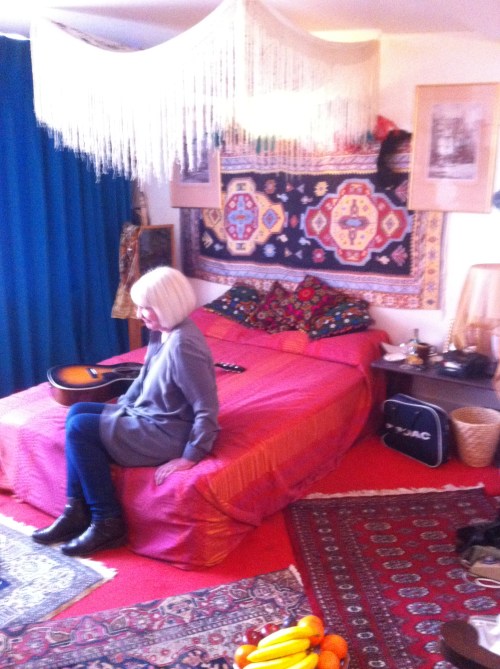
IMG_5296

Hendrix’s reconstructed bedroom, with former girlfriend Kathy Etchingham

When Barrie Wentzell photographed Jimi Hendrix at the rock star’s London flat in 1968, neither of them imagined that the colourful bedroom would one day be transformed into a museum. “I photographed him for Melody Maker,” says Wentzell. “It seemed so small when I went back recently. He’d have found it hilarious that it’s being turned into a museum.” Hendrix moved into 23 Brook Street in January 1968 with his girlfriend Kathy Etchingham, using it as a base to explore London as well as a space to conduct interviews and hang out with fellow musicians – George Harrison was one of those who stayed overnight on a camp bed. Since 2001, the flat was used as offices by the Handel House Museum who are located at the 18th-century composer’s old home next door at No 25. The entire space is now being renamed Hendrix & Handel In London, and Hendrix’s flat will open to the public in February 2016.

Hendrix arrived in London in September 1966 and began playing shows on his first night, immediately attracting the attention of a London music establishment who had seen or heard nothing like him. Incendiary, transformative early gigs in tiny West End clubs were witnessed by the likes of Eric Clapton, Pete Townshend and The Beatles. “All those guys, they played the blues but Hendrix had taken it to a different level,” says Wentzell. “He told me once, ‘Sometimes I play the guitar and sometimes the guitar plays me’. But he was very humble and soft-spoken, he kind of under-rated himself. He would talk about how great Clapton was and Clapton said the same about him. They had real love for each other.”

London boasted a powerful music scene packed into a small corner of the West End, and word about Hendrix soon spread. He became a star and as a result, he loved the city. Although he’d met Etchingham on his first day in London, he spent much of those early months moving between flats and hotels. “He moved around an awful lot and had lots of girlfriends who all thought they were the one,” recalls journalist Chris Welch, who interviewed Hendrix several times. Etchingham and Hendrix eventually moved in together, paying £30 a week for the pokey one-bed Mayfair apartment above a restaurant called Mr Love. Hendrix called it “the first real home of my own” and helped select ostentatious decorations of bright fabrics, peacock feathers, bric-a-brac and a rubber rat. The bedroom, which is where most of the entertaining took place, is being recreated for the museum after curators identified and tracked down around 70 items of furniture and fittings. Other exhibits include clothes, records and guitars as well as a timeline exploring Hendrix’ pivotal London months.

Although Hendrix spent his time in Brook Street enjoying some level of domesticity – he played Risk and watched Coronation Street – he also threw himself into the world of Swinging London, which was right on his doorstep. Promotors, agents, publicists, music papers, clubs, guitar shops, studios and fashion boutiques were all based in Mayfair and Soho. “He was in the best place to be,” says Welch. “Bands from all over the world converged on London and it was still the hippie era so if you were going to be accepted for being unusual anywhere it was the West End. He was adopted by Londoners very quickly.” Wentzell agrees. “There was a lot of love for Jimi,” he says. “He was only around for four years and he changed the world, he really did.”

Hendrix, who died in London in September 1970, always loved the flat’s connection to Handel – indeed, he believed he was living in Handel’s old home as Handel’s blue plaque was on the wall separating the two properties. “I remember him saying that he got this vibe of music from Handel and we joked about how he’d like to have jammed with him,” says Wentzell. “I guess now he is.”

Handel & Hendrix In London, 23-25 Brook Street. Opens on 10 February 2016.

Shrines of London


This is an edited version of a talk I gave last year for the London Fortean Society about London’s shrines. I decided to repost it after visiting the David Bowie shrine in Brixton last week.


To prepare for this speech and in an attempt to get my head around what a shrine was, I began thinking about the simplest shrines you see in London – that’s usually flowers tied to a lamppost after a sudden often violent death or the ghost bikes you see tied to lampposts after crashes.

That got me thinking about the largest shrine I’ve seen in London. This was in those strange weeks after Diana’s death. I was in my 20s and strongly Republican and so had little interest in the public mourning, but an older friend suggested we go and see what was taking place at Kensington Palace as it was something that only happens once in a lifetime. As we walked across Hyde Park this strange smell began to creep across the park – and I can still smell it to this day, the acid sweet stench of rotting flowers. It was indeed an incredible sight. The area in front of Kensington Palace was carpeted with flowers, thousands of bouquets, already turning to compost in the summer heat. People were walking among them, stooping like peasant farmers or bomb disposal experts to read a label. I’d never seen or smelled anything like it. You could not get near the palace gates.

Just look.

What fascinated me also about all this was that it had a seditious, outlaw aspect. There was a lot of noise in the press about whether the Queen was treating Diana’s death with sufficient respect, and this huge impromptu shrine – by the people, against the establishment – was given the atmosphere of an almost revolutionary act. It was a fascinating combination – the privacy of remembrance, carried out on a larger scale with political implications.

So perhaps these are some of the key elements for a memorable shrine: they need to be in memory of a colourful life cut short, possibly violently and unexpectedly, but also be plebeian or proletariat in nature, carrying a sort of unofficial, rebellious, streak, upsetting the forces of the order and establishment.

Unsurprisingly. London is filled with them.

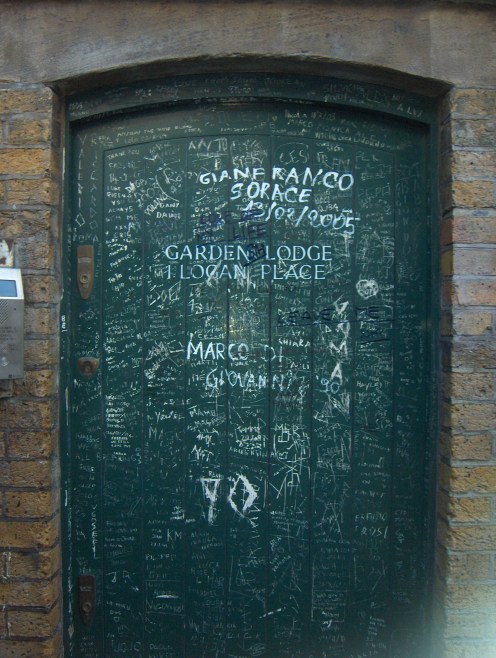
RR-Freddie-Mercurys-door.jpg

A disarming proportion are devoted to rock stars. This is Freddy Mercury’s old front door in West Kensington, featuring primitive scratched messages from fans all over the world.

There’s also a more or less permanent shrine outside Amy Winehouse’s house in Camden Square. It’s interesting to speculate why some musicians get this treatment and others don’t. For instance, why has Abbey Road become a shrine for Beatles fans but there’s nowhere similar for the Rolling Stones? Perhaps a shrine needs a magnetic location, and the Stones have never created that particular relationship with any single space in the city, perhaps we will need Mick or Keith to die before we find out.

I used to live near Abbey Road, and they had to repaint the wall every two weeks or so such was the flood of graffiti, even though you’d never actually catch anybody in the act of doing it.

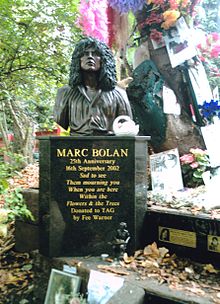
Similarly, I’ve always been slightly puzzled as to why Marc Bolan has attracted a shrine. This is the sycamore tree on Queen’s Drive in Barnes that Bolan’s Mini crashed into in 1977, killing him instantly. People have been leaving notes and flowers ever since, and now there’s a bust. Why Bolan? I like T-Rex but don’t really see him as the sort of shamanic, eternal talent you’d think attracted such a tribute.

Perhaps it’s simply the violent nature of the death that appeals to people. But the way his death tree – his cause of death – is being marked is inescapably macabre. In some ways, it makes me think of the old Bill Hicks line, that the last thing Jesus would want to see if he came back to Earth was another bloody crucifix.

That brings us neatly to the religious aspect of shrines. Even in the secular ones, it’s there under the surface, this primitive, sacred need to mark a spot and remember the dead devotionally. But London also has numerous religious shrines. There are two that particularly interest me. One is on Bayswater Road at Marble Arch, where there’s a small convent for nuns. In the basement is a chapel, with walls covered in ancient relics – skin, bone, bits of fingernails – pulled and plucked from some of the 350 Catholic martyrs who were hanged at Tyburn, the gallows nearby. Behind the altar is a replica of the gallows itself. It’s remarkably medieval and extremely weird, especially when a nice old nun is telling you about their favourite piece of shrivelled skin.

There’s also a really interesting element of the shrine found in the canals of west London. Here you often find coconuts floating in the water, sometimes cut in half and containing candles, sometimes tied with ribbons. I used to live on a narrowboat and would occasionally travel west to Uxbridge – the nearer you got to Southall the more you’d see.

I was told they were placed in the water by London’s Hindus in religious ceremonies, with the canal representing the Ganges. A recent article confirmed this: they are place in the canal as an offering to Maa Ganga who symbolises Mother Earth and also the elixir of life, as water is where all life begins. And why coconuts? A Hindu scholar has explained that “Coconuts are the fruit of the Gods – it’s a pure fruit with remarkable qualities, it takes in salt water and produces sweet fruit and it’s neatly packaged too. Also it’s a symbol of fertility, it reflects the womb, and has human qualities – it has two eyes, a mouth and hair.” It’s fascinating that this symbolism has been transported across hundred of miles and generations.

When I was researching this talk, I began to wonder whether London had any graffiti wall shrines – that’s public spaces that have been adopted by street artists to commemorate specific moments and remember people. I’m sure that these exist, but they are hard to pin down because of the transient nature of the form. London does have lots of murals, huge paintings, often commissioned by the community and with a political angle. There’s the Battle of Cable Street mural in Wapping and the Nuclear Dawn CND mural in Brixton. A lot of these are official, but it was interesting to read about the War Memorial Mural at Stockwell tube. This commemorates various aspects of war, with a section for Violette Szabo, who worked behind German lines in WW2 and lived in south London. More recently, artists decided to include on the memorial an image of Jean Charles De Menezes, who was murdered by the police in 2005. But there were disagreements – people felt he didn’t conform to the spirit of the overall piece. Eventually, he was painted out. But there is a small mosaic and shrine to De Menezes nearby.

Then there’s the really strange shrines. I had no idea until this week that the phone box near St Bart’s hospital had been briefly turned into a shrine to Sherlock Holmes after the TV show had him falling from the hospital roof. I don’t imagine there are that many shrines to fictional characters elsewhere in the world.

London also has a skateboard shrine. If you look over the side of the Jubilee Footbridge, you’ll see dozens of broken skateboards lying on one of those immense concrete feet that anchor the bridge to the Thames. These are boards that have been broken during skating sessions by the nearby skaters on the South Bank in the undercroft, and ceremoniously chucked over the bridge to form this strange graveyard.

Then there’s what for me is the saddest shrine of all, partly because it no longer exists. I used to see this all the time when I walked Farringdon, close to Mount Pleasant sorting office, where there are steps going up the viaduct. High up on the wall of one of these dank stairwells you’d see a dozen or so spoons stuck to the tiles.

I always wondered what this was about – even though I think I also partly knew. One day I asked the collective wisdom of Twitter and somebody told me what I’d always suspected: that these were placed here by heroin users in tribute to their dead comrades, each spoon marking a departed soul.

This summarises the essence of an urban shrine for me – it’s clandestine, it’s seditious, it’s violent, it’s about a form of martyrdom and above all it’s about remembrance. I was extremely sad to see the spoons had been removed when the bridge was recently repainted. It’s like those people, those lives, were erased from the public memory. Even as a shrine, they are not allowed to exist.

“I loved the brutality of it”: Suede and London

I wrote about Suede for the current issue of Uncut. This was something of a revelation for me, as I was able to remind myself how excited I was when I first heard Suede – I remember playing “Animal Nitrate” over and over again in my bedroom, thinking that I’d finally discovered a band I loved as much as The Smiths. Before interviewing the band, I went to see them play at the Roundhouse and all of that old energy was still there, and I was just as thrilled as I had been at 16.

One angle covered in wide-ranging interviews with Brett Anderson, Mat Osman and Neil Codling was the importance of London to the Suede aesthetic – this was a band that even renamed themselves The London Suede, albeit under duress, for their American releases.

suede.jpg

When the band were formed, Osman and Anderson shared a flat on Hilever Road in White City “on the border with Notting Hill – bohemia one way, estates the other,” Osman said, and Suede’s music came to occupy this very same sort of space, the sort of London written about by Patrick Hamilton, Dylan Thomas, Gerald Kersh and Roger Westerby in those novels about outsiders arriving in London and being instantly swallowed by vice and excitement. Doing something similar around this time was the TV version of Hanif Kureishi’s Buddha Of Suburbia, with a soundtrack by David Bowie – the combination of Suede and Kureishi is what led me to Bowie.

“London was a place where you can be what you want,” says Codling. “You can disappear, you can embrace any subculture, you can reinvent yourself and glamour is a possibility inherent in that.”

Anderson didn’t deny any of this. “I romanticised what London was,” he said. “I lived in a bit of a film fantasy. I loved the brutality of it, the loneliness and the hardness of it all. I really responded to that. But this is what we were living. I was part of this world I was writing about. I’ve always tried to find the romance in any situation I’ve been in and that happened to be the situation I was in. I’ve always loved art that deals with the prosaic. The Smiths aesthetic, I found that very powerful, ‘the riches of the poor’. There’s beauty in the brutality.”


Anderson told me he’s still inspired by London, often cycling the towpath from his home to West London to Camden, even if it doesn’t directly appear on the band’s new album. The excellent Night Thoughts is instead preoccupied by those unnerving concerns about children and fatherhood that keep Anderson – and myself – awake at night.

“I refute the tortured artist clichés, it’s bullshit, a lazy misunderstanding of what creativity is,” he said. “It’s not expected of authors and film-makers, Michael Haneke always seems very balance and his films are genius of discomfort. For me, a writer is finding those moments of friction, and those can occur in any existence, in any relationship, no matter how stable or content. There are always misunderstandings and moments of friction and this is what I write about.”


The Black Museum at the Museum Of London

The Museum of London’s new exhibition is undoubtedly something of a coup. Crime Museum Uncovered features around 600 items from the Met Police’s private museum, once known as the Black Museum but now renamed the Crime Museum. I visited the Crime Museum at Room 101 in Scotland Yard several years ago and wrote about the experience here.

What’s fascinating is the differences between the way a public museum like the MoL treats the same objects as the police museum. The shelf above is from Scotland Yard. It is located in an ante room before the museum proper and contains a selection of weapons seized on the streets of London, and above that a dozen or so death masks taken of the heads of executed prisoners. This is pretty much the first thing visitors to the museum will see and the ensemble is like a whack on the head with a cosh. It says London is full of criminals, this is how they will try to kill you and this is what we will do to them when they are caught.

At the MoL, the same material is treated much more sensitively. Only six or so weapons are exhibited, and these are placed neatly in a clean glass box rather than scattered higgledy-piggledy over an old table. The heads are also on exhibition, but some distance removed from the weapons, creating a disconnection between crime and punishment.

That is, perhaps, the only way the MoL could present this exhibition. I’ve said before that the Crime Museum as curated by the police is entirely inappropriate for the public and I’m not entirely sure it’s appropriate for the police as it is deliberately created to cultivate an air of suspicion bordering on the paranoid, a repeated insistence that the streets are not safe for policeman, that anybody could be out to kill you, using anything from an umbrellas to a telephone. It’s an attitude that goes some way towards explaining the deaths of numerous Londoners at the hands of the police.

The MoL also has to fill in some of the blanks at Scotland Yard. The Crime Museum is ostensibly a teaching museum  – it shows coppers the history of crimes and how they have been solved. But the cases at Scotland Yard contain little explanatory detail – that is provided orally by the curator. At the MoL, by contrast, there is a fairly thorough, detached but instructive look at a selection of important crimes, showing what they have revealed about forensics, police procedures, detective work and criminality (many of the cases, too many, concern crimes against women). They also touch on several of the most significant crimes of the era, including the Krays, the Richardson, Derek Bentley, Dr Crippen, Christie and the Acid Bath Murderers. It’s all very carefully selected and brilliantly explained, with items well chosen to both inform and occasionally horrify. This is easily the best part of the exhibition.

Gloves worn by John Haigh to dissolve the body of Mrs Olive Durand-Deacon, 1949 © Museum of London

Gloves worn by John Haigh to dissolve the body of Mrs Olive Durand-Deacon, 1949 © Museum of London

The MoL then breaks away from these individual crimes to look at broader themes, such as concealed weapons, drugs, forgery, armed robbery and espionage. While the focus on individual crimes does not include anything from after 1975 to avoid distress to victims’ relatives – which means the infamous Dennis Nilsen cooking pot isn’t on show thankfully – the exhibits on broader themes go right up to the present day. That is largely so they can show items related to the July 2005 bombings in the form of reconstructions of the homemade rucksack bombs, something I found particularly unnecessary as these weren’t even from the crime scenes, which is a core part of the Crime Museum’s relevance. Authenticity is absolutely vital here – it is the raison d’etre of the entire collection – and if the items are not original, you leave yourself open to accusations of Chamber of Horrors style ghoulishness.

It’s a rare misstep from an otherwise sensitive exhibition, that ends with an excellent film in which policeman, curators, crime victims and professors discuss crime, the museum and its role in police life.

the first criminals to be convicted in Great Britain for murder based on fingerprint evidence, 1905 © David Gill/Museum of London

the first criminals to be convicted in Great Britain for murder based on fingerprint evidence, 1905 © David Gill/Museum of London

So that’s all good, but I still came out of the Museum of London exhibition with mixed feelings.

It goes right back to the start. The exhibition begins with a “reconstruction” of the original Victorian museum. But this is a reconstruction in the very loosest sense – basically, it means the items are old but they are being presented in a very modern way. That is far removed not only from the Victorian museum but also from the contemporary Scotland Yard museum, which does not look, feel or smell modern at all. The Crime Museum is old-fashioned, cluttered, chaotic and deeply depressing, and a genuine piece-by-piece reconstruction, or even a photograph of the current Scotland Yard museum, would have been a real benefit, as otherwise it’s impossible to discern the peculiar atmosphere of the place. Without it, the MoL are sanitising not just the nature of crime – which is excusable – but also the nature of policing, which is not. That after all goes to the heart of what the Crime Museum is about, who it is for and what that means to Londoners, and it’s something that is entirely absent from this exhibition – the one hint comes from the only item relating to the long history of riots in London, which is a police shield from Broadwater Farm that’s been burnt by a petrol bomb. What does that tell you about the way the police regard these inner city riots?

The Museum of London have produced a fascinating, thoughtful and thought-provoking reimagining of the Crime Museum’s contents that explores the nature of crime and law enforcement in London, but it does not tell the full story of the Crime Museum. I imagine Scotland Yard will be very pleased about that indeed.

Archive: Julian Cope interview

I recently rediscovered this 2005 interview with Julian Cope from Time Out. It took place over the phone and my main recollection is that Cope went to the toilet halfway through, with the sound of his piss hitting the urinal adding a certain sonic tang to the transcription.

They say that every boy needs a hobby; over the years Julian Cope has had plenty. At first it was taking LSD on ‘Top Of The Tops’ and talking about Scott Walker. Later it was sitting beneath a tortoise shell and listening to krautrock. Now it’s playing monolithic sludge rock riffs and visiting ancient monuments. There’s no pattern, it’s just how things worked out.

But before we get into one of those ‘isn’t Julian Cope crazy?!’ mindsets, let’s clear one thing up: Cope isn’t a whacked-out, moondog, schizoid beam-chaser, or even a ga-ga, freaked-up, attention-seeking acid-eater, he’s just a lot more interesting (and, crucially, interested) than most rock stars. Let the man himself explain, as he prepares for his Friday night gig at the Royal Festival Hall: ‘Playing the role of Julian Cope means I can hide behind what Julian Cope is supposed to be. People always say, “You’re a lot more normal than I thought you would be”, and I say, “Yeah, but if I was as weird as you thought, I wouldn’t be able to achieve fucking anything”. The whole point is that it’s the subject matter that’s weird, not the person behind it.’

These days such achievements are often literary – particularly best-selling books on standing stones (The Modern Antiquarian and The Megalithic European). But Cope continues to record. His latest is Citizen Cain’d, an epic, guitar-shredding study of alienation and monotheism that is heavily informed by travels in Iran and stupidly heavy rock ’n’ roll.

‘We’ve all got an inner moron,’ he explains. ‘And rock ’n’ roll entertains your inner moron, but that doesn’t mean it can’t be smart as well. I thought it would be great to take garage rock and fuse it with genuinely amazing guitar. American punk bands always struck me as being better because they were great musicians playing down. One of the reasons I work with Doggen is that he’s one of the best guitarists I’ve ever heard. He’s amazing. But it’s context, I never put him in a good context. I’m never going to make him look like Eddie Van Halen if he’s got to come out of the swamp.’

Talking of swamp, support on Friday is from San Francisco’s Comets On Fire, quality purveyors of cosmic sludge, who are playing their first UK show. Cope has been a fan for a while. ‘The great thing about Comets is they very much know where they’re coming from. When I first got in touch with Ethan Miller (Comets main guy) I was saying, “Man, you’re totally Roky Erickson meets John Fogerty with Hawkwind backing”, and he said “Shit man, in my dreams that’s where we are”. But it’s not in their dreams, they’re there already.’

As he enthuses about favourite bands like Speed Glue And Shinky (‘I’m a fucking cunt for a singing drummer’) and Monoshock (‘They’re really vile. Like a sewer Stooges’), it’s clear that Cope is totally into this stuff. And when Cope gets into something, it normally gets into print. ‘I’m writing a book that’s just called ‘Rock ‘N’ Roll’, but it has the most portentous subtitle in the world. I can’t even remember it. On the back we’re going to have a massive question mark and underneath say “Who will entertain your moron?”’

Will this be written in his trademark stream-of-consciousness style? ‘Actually, I’m probably no more stream of consciousness than Robert Graves, I’m just fucking great at giving that impression. One thing I do is write what I want to say, then I go into an internet translator and turn it into German, turn the German into French and then the French back into English, and then pick out the nuggets. It ends up sounding like Faust lyrics. I’m happy that secret being leaked: the people who hear it and don’t take it seriously won’t learn anything, and the people that know wisdom is everywhere will take it on board and start doing it. Part of my job is to reveal other ways. I’m trying to be a facilitator rather than somebody who hides behind a cloak of mystery.’

And Friday? ‘Expect generic dark psychedelia. I’m really punishing the cliché. Get there early because we’re going to play two sets, one as people arrive, then after the Comets we’ll come back and do that monolithic sludge. It’s going to be a real vibe. Healthy amounts of mushrooms will be good and women should dress for the occasion.’

Robert Fraser: the butterfly, Performance and the Rolling Stones

I’ve often thought that when William Rees-Mogg wrote his famous editorial in the wake of the Redlands court case, the butterfly was not so much Mick Jagger or Keith Richards but the third party in that sorry affair. Art dealer Robert Fraser was convicted alongside the Rolling Stones for possession, but while Richards and Jagger were spared prison partly thanks to the Times editorial, Fraser pleaded guilt and was sent to Wormwood Scrubs. It’s difficult now to think of Richards and Jagger as butterflies; Fraser was the one that got left behind to get broken.

Some of letters and telegrams Fraser received and sent while during his four months at the Scrubs feature in the Pace Gallery’s superb exhibition, A Strong Sweet Smell Of Incense, which runs until 28th March. The title comes from Richard Hamilton’s collage, created as a response to the Redlands bust.

It is displayed alongside one of Hamilton’s other famous creations in his Swingeing London series, which shows Fraser and Jagger being led away from court.

Hamilton was one of several artists that Fraser promoted at his Duke Street gallery in the 1960s, and many of them feature in the show. Here there are works by Andy Warhol, Jim Dine, Eduardo Paolozzi, Claes Oldenberg, Clive Barker, Gerhard Richter, Bridget Riley and Peter Blake, as well as later pieces by Francis Bacon, Keith Haring and Jean-Michel Basquiat.

_DSC2753-Edit-Edit

Copyright Pace London

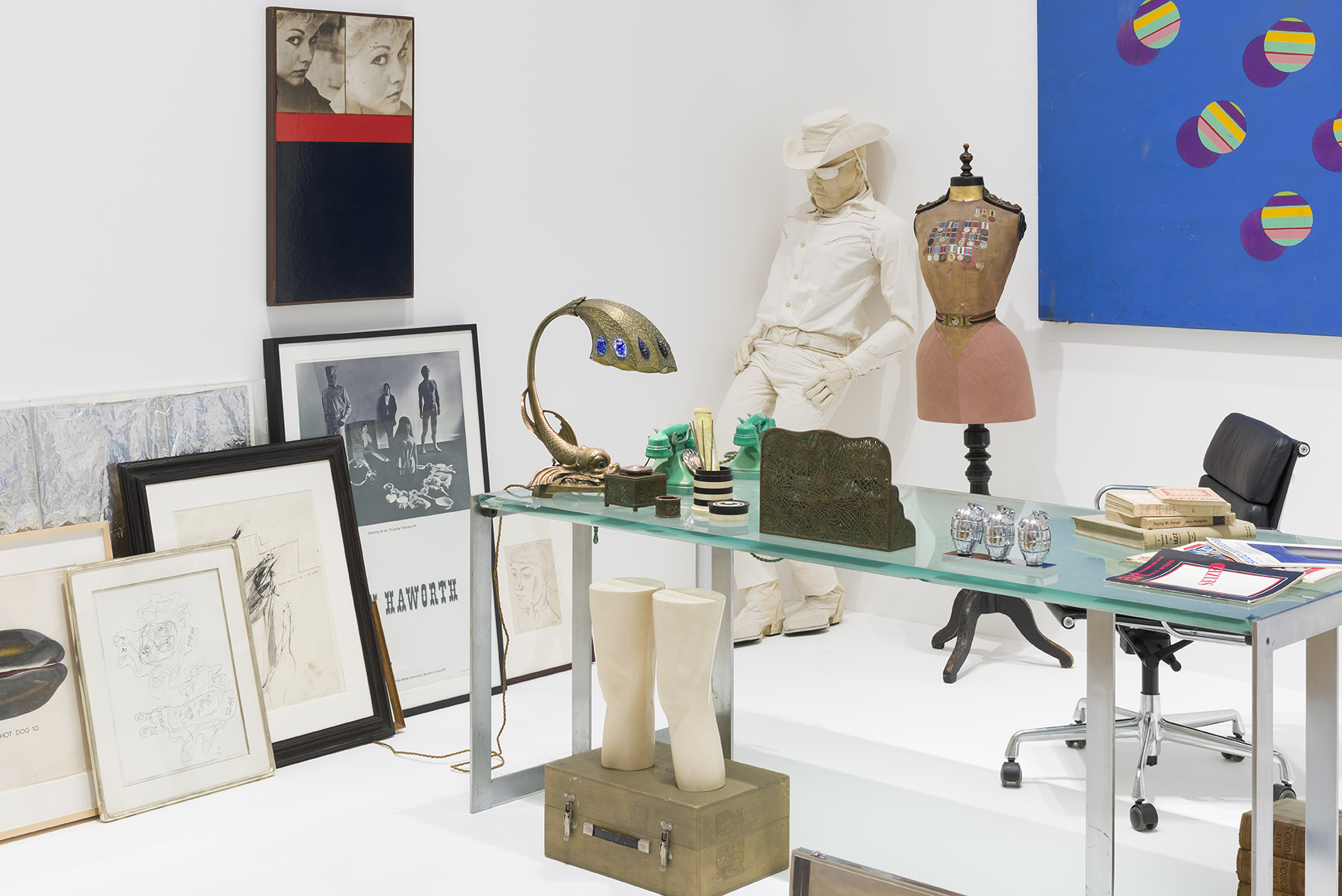
There’s also a nice mock up of Fraser’s office.

_DSC2713

Copyright Pace London

Fraser had a great eye and a sense of daring, and that helped attract the stars. Fraser’s gallery became a centre for the cool kids of the counterculture, attracting pop stars, actors and film directors as well as perennially lurking scene figures like Keith Anger. Paul McCartney described Fraser as “one of the most influential people in the London sixties scenes” and The Beatles feature in the exhibition, most wonderfully in the shape of the drumskin from Sgt Pepper’s Lonely Hearts Club Band, which Peter Blake created under Fraser’s direction. Fraser was the catalyst for much that happened in this mid-60s meeting of art and pop.

Copyright Pace London

Copyright Pace London

Fraser was nicknamed Groovy Bob and a sense of the fluid interchange of ideas that resulted from these encounters can be seen in a long display cabinet, arranged with artful haphazardness and crammed with personal letters, memos, books, flyers and photographs. There’s no caption for this wonderful ephemera, but rich pickings for those who take the time to drink it in.

_DSC2801

Copyright Pace London

I was fascinated by a 1968 letter Fraser wrote to Richard Lock at Simon & Schuster proposing a biography of the Rolling Stones, which “would be satirical and totally fictional”. It was seen as a suitably Stonesy response to Hunter Davies’s recently published and “totally humourless” Beatles biography. Sadly, this came to nothing.

I also liked a letter written by the producer of Performance, confirming that Anita Pallenberg would be renting Fraser’s flat in Mount Street for the eight-week duration of the shoot, at £30 a week. This was presented alongside a page of the script from Performance. Fraser’s spirit is essential to the milieu and mystery around Performance. He had known Pallenberg since 1961, and his interest in art, drugs and bohemia was infectious.  Pallenberg later recalled that around Fraser gathered “a fascinating group of people who were on the cutting edge of what was happening in high society, great cultural evenings, wonderful intellectual talk, plenty of hash and marijuana and speed and LSD.” Marianne Faithfull’s recollection is a more withering English take on the same deal: “Desultory intellectual chit chat, drugs, hip aristocrats, languid dilettantes and high naughtiness.”

The weeks that Pallenberg, with boyfriend Keith Richards, stayed at Fraser’s flat, would be pivotal to the unfolding psychosexual drama surrounding the Stones. Fraser was using heroin (his opium pipe is on display), and soon turned on Keith, who was otherwise writing Let It Bleed and brooding about the shenanigans Pallenberg and Jagger were getting up to while making the film.  The ensuing atmosphere of jealousy, betrayal spiced by heavy drug use would hang round the Stones for decades. As Richards spiteful autobiography shows, they still haven’t entirely gone away.

performance

Cecil Beaton photograph from Performance set.

Also floating around the scene was another arch mischief-maker, Kenneth Anger, and a couple of his missives to Fraser can be found in the cabinet. Best of these is probably the telegram requesting £60 which concludes “GROOVING ON MAGIC CURRENT ONE TRILLION VOLTS AFTER AUSPICIOUS LUCIFER HOUSE BOAT LOVE IS THE LAW”. Indeed.

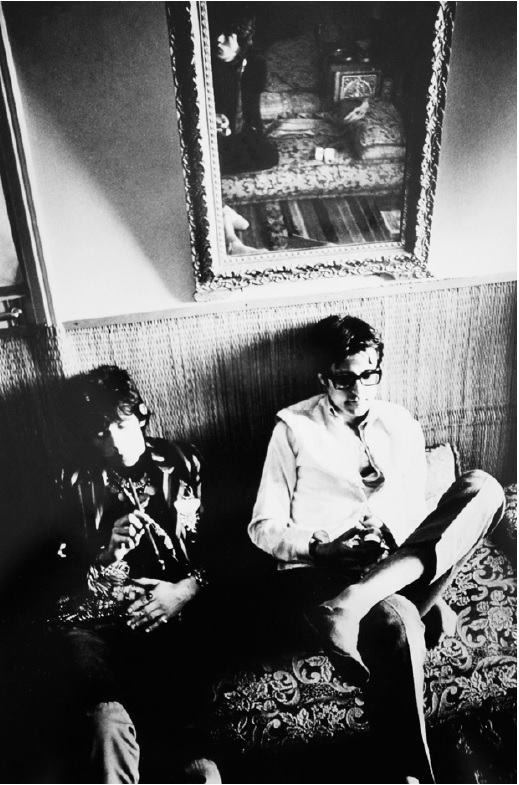
But it’s the Stones with whom Fraser became most closely associated, for better or for worse. No matter how it ended, I’ve always loved a pair of photographs Michael Cooper took of the Stones with Fraser in 1966 and 1967 in Morocco, a location that is almost as emblematic of the 1960s as London itself, lingering even in the set design of that orgiastic lightning rod Performance. Here is the calm before the storm, before the butterfly is broken.

fraser1

fraser2

A Strong Sweet Smell Of Incense at Pace London, 6 Burlington Gardens, W1S 3ET.

Earls Court and the death of fun in London

“In London, it seems everything that’s not a shop, offices or luxury apartments is being demolished,” sighed artist Duggie Fields when I interviewed him last month for a piece in Uncut about the imminent demolition of Earls Court Exhibition Centre. It’s a quote that, in a nutshell, seems to encapsulate all that is going wrong with London right now.

“There is so much damaged being done to London all over, Earl’s Court is just part of it,” says Fields. “London is losing a scale of living that has been very special for a long time. Now we have this mini high rises that could be from anywhere, they are characterless and there are so many of them.”

Earls Court will be pulled down early next year and replaced by houses, ending the area’s 120-year history as a place of fun. This history is well known to London nerds, but is worth repeating. The former cabbage field of Earls Court was transformed into a funzone by Yorkhire entrepreneur John Whitely at the end of the 1880s, when he brought Buffalo Bill’s Wild West Show to the newly transformed exhibition site, hemmed in between railway lines. It featured a miniature Rocky Mountains, Native American village, corrals and a cowboy bunkhouse. “The show was a revelation,” write Felix Barker and Peter Jackson in Pleasures Of London. A few years later, the site attracted London’s first big wheel – a 300ft monster called the Gigantic Wheel.

When that lost its thrill, new entertainments were sought – including plans for a mechanical racecourse. Numerous exhibitions were also held there – including Captain Boynton’s Water Show in 1893, the Greater Britain Exhibition, in 1899 and Shakespeare’s England in 1912. Then in 1937 the Exhibition Centre was built. It opened with a Chocolate and Confectionery Exhibition and went on hold swimming galas, motor shows, the Royal Tournament and events for the 1948 and 2012 Olympics.  It’s a decent looking building, too, well worth saving for its lovely Art Deco curve and revolutionary concrete engineering. So many magnificent buildings from this era are being lost.

Less, pleasantly, in 1939 it hosted a gargantuan meeting of Oswald Mosley’s fascist blackshirts.

From the 1970s, Earls Court also began to host pop shows. David Bowie was first to play there, although Noddy Holder of Slade claims they were the first to book it and then managed to improve the sound after Bowie flopped. Concerts by Bob Dylan, Led Zeppelin, Queen, Rolling Stones and Pink Floyd followed. I saw Oasis there, unfortunately, and also the BRIT awards in 2000, when I threw a champagne cork at Christine Hamilton.

Slade fans at Earls Court

And now it’s to come down, replaced by 8,000 houses and some shops.

Duggie Fields has lived in Earls Court since the 1960s. You may recognise his flat – and former flatmate.

He points out that the removal of the Exhibition Centre will, at a stroke, remove any point or purpose to the Earls Court area. “It has nothing for people to come to,” he says. “Just boring anonymous shops and lots of traffic. All we’ll get is more chainstores because there’s no neighbourhood, there’s no locals. You can’t create villages, they grow over a long period of time.” He also fears for the pubs and restaurants that rely on the Exhibition Centre, which has still been functioning almost round the clock despite impending doom, for their custom.

He’s right. Earls Court is, even with the Exhibition Centre, one of the most boring areas of London. Without it, it’s pretty much irrelevant. But there’s a problem here too. London needs housing, desperately. Surely these 8,000 or so units will help?

It seems unlikely. The new apartments will – like those in the big new developments and Nine Elms – be aimed at the pockets of investors and speculators, people with deep pockets who have taken advantage of stagnant interest rates to buy up property and then charge eye-watering rents for them. It’s hard to blame them, as economic policy seems designed purely to over inflate London’s property market, but the damage is considerable. Because not only are they building identikit apartments in areas nobody that actually needs housing can afford, they are in the process annihilating anything that could be seen as fun – pubmusic venues, sports grounds as well as historic structures like Earls Court. It’s a depressing, dismal outcome that offers the worst of all possible worlds.

It’s also entirely typical of the current state of London: could you possibly imagine a scheme as imaginative and as exciting and beneficial for the public as the conversion of Tate Modern happening today? Not a chance. It would be flattened and replaced by luxury glass apartments. What do we get instead? A bloody Garden Bridge, stupid cable car and shopping centres. Thank god at least the Olympic site has been safeguarded – for now.

“There’s nothing to build on the heritage they’re throwing away,” says Fields of Earls Court. “It’s been an exhibition site for over 100 years. London is tossing that out with as many other things as it can toss out under this current administration.”

Syd, psychedelia, If…. and the Olympics: an interview with Kevin Whitney

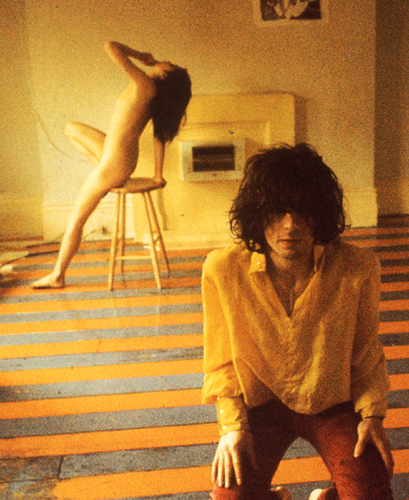
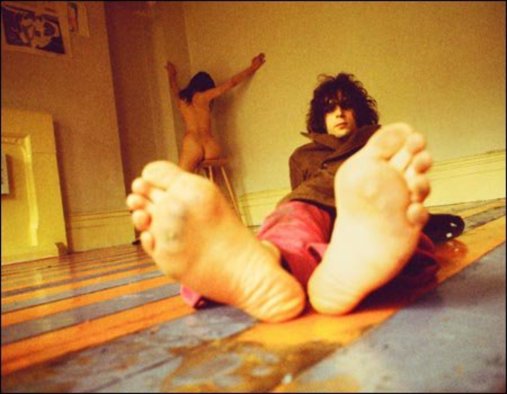
I have a piece in the current issue of Uncut about Psychedelia,  a film made in 1969 and featuring Syd Barrett. The film has been sitting underneath Kevin Whitney’s bed for 40 years, but will be shown in June 2014 at the ICA ahead of its sale. Whitney was on the fringes of the psychedelic movement in the late-1960s and later became the first official artist of the Olympic movement. ‘In my work there are still hints of psychedelic imagery,’ he tells me. ‘But using beautiful athletes instead of mad freaks.’ 

Psychedelia can be seen at Room&Book: ICA Art Book Fair, ICA, 6-8 June. 

——-

‘I was at art school until 1970 and during I was making the film. I was inspired by psychedelic light shows, which I’d screen on the front of Chelsea Art School  at underground pop shows at the Roundhouse. Chelsea Art School was a modern building off the Kings Road. It was the only building built in the 20th century to be used as an art school. It’s now a hotel. It was very anarchic. Art is now geared towards corporate success and Saatchi but then that sort of thing was frowned upon, you weren’t supposed to make any money out of it. You did conceptual things, it was against the system. Now it’s the opposite and has no balls. We were very privileged to be around then. We took art into the streets.

Chelsea Art School on Manresa Road, built in 1963

Previously, I’d been at art school in Ipswich with Brian Eno. We smoked our first joint together at Christchurch Park in Ipswich. We did a thing where about 12 of us would get on a bus and we’d have these sheets of Perspex the size of a newspaper. We cut out the title of the paper and glued it to the Perspex and then sit next to people on the bus pretending to read the stories from this empty sheet of Perspex. Everybody thought we were bonkers.

UFO Club flyer

I never did light shows at the UFO Club. I went there but they had some Americans, Joe’s Lights, who got the contract and nobody else could do it. I knew them and admit I was influenced by their ideas but I also showed them some of my tricks. One was fabulous. You’d get two pieces of Perspex and put in some olive or vegetable oil, then drop some vegetable dye – bright blue, red or yellow – and then close the Perspex together. You’d put that in the projector, which had a very powerful light and would heat up the dye and send it shooting to the edges of the Perspex. It was like going through a timewarp. Joe’s Lights liked this and used it at the Roundhouse for the big Jefferson Airplane/Door show in 1968. [Editor note: I think that while Joe’s Lights did the Roundhouse gig, the Boyle Family did projections at UFO.]

In 1968, I began making my film, Psychedelia. Syd was part of the scenario. Well, he was the scenario. Anybody that would agree I got to appear in the film, which was done at this basement on Old Church Street in Chelsea in a house owned by Antonia Chetwynd [regular visitors included Donald Cammell, David Bowie, Marc Bolan and Anita Pallenberg]. One day I went to Wetherby Mansions to pick up Syd. I was going to take him to the art school to this red and green painted studio I had in the annexe where I was making the film.

Syd Barrett in Wetherby Mansions

On the way, Syd offered me half a Mandrax. It’s like a sleeping pill that makes you very randy. We took half each. Then we got to the art school and I realised my camera didn’t have a cassette in it and all the shops were closed. So I said we’d do it tomorrow in Old Church Street. In the evening I called Duggie Fields [Syd’s flatmate, still resident at Wetherby Mansions] to check Syd had got back okay and Duggie told me he’d gone to Ibiza. He had a passport with him and he’d just gone to the airport and taken a flight to Ibiza.

When he got back we went to the basement and did the filming. I just had the camera with this psychedelic lighting. It was very amateur and everyone was very stoned. I’d sit people down and tell them to do whatever they wanted. Some took their tops off, some stared at the camera, talked, had a cup of tea… and I just filmed it because they were fabulous people. I filmed so many. In the scene I shot with Syd was Geoffrey Cleghorn, who was a friend of the Who and the Stones. I’d met him at art school in Ipswich and he’d followed when I moved to London and got involved in the whole scene. He’s an amazing guy. There was another chap called David Crowland. There’s a chap called Rupert [Webster], who was the very pretty boy in “If….”.


I screened it while playing Velvet Underground’s Sister Ray. I also use them on the other film I made Red And Green, when they are actually on the soundtrack, the Syd film was silent though I would have been playing Velvet Underground in the basement when making it. I was obsessed with them. It was all very Warholesque.


I gave my camera to Derek Jarman, I was living with the artist Luciana Martinez and she said, ‘You’ve finished with films and Derek’s a lousy painter, so why not give him your camera.’ He’d just finished making The Devils with Ken Russell, doing the sets. I did that and the rest is history. I then got totally into paining, film was an art student fling. In 1982 I got involved with the Olympis and been there ever since.

“Female gymnast”, 1984

I knew Syd as well as anybody could know Syd. He definitely wasn’t on this planet but he was lovely, very charming, and he seemed to like my paintings. He liked to paint himself and because I was pretty good he warmed to me. Also, I don’t hold him in awe, I was the same with Bowie, they were friends and I’d talk to them like that. I’d ask to draw them but treat them as I would anybody. People can treat pop stars in a different way and they can get very isolated. Most people were too much in awe of Syd to ask to film him and I think that comes across in the film. He was a very troubled mind and this wasn’t a great time. He’d been eased out of the Floyd and Dave Gilmour had taken over. But people who knew him said he looks so happy.’


Mama Cass in London: drugs, towels, Michael Caine and Charles Manson

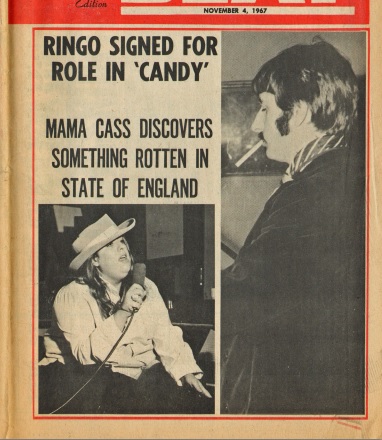
I have a piece about Mama Cass Elliot in the current issue of Uncut. One area I didn’t have space to cover was Cass’s arrest in London in 1967 when The Mamas & The Papas were travelling by boat to England to play a show at the Albert Hall. They had arrived at Southampton when they were told police were waiting with a warrant for Elliot’s arrest. The band frantically tried to destroy their stash of weed and then went on to the dock where they were supposed to meet label boss Lou Adler and his friend Andrew Loog Oldham. They were instead greeted by six of the Met’s finest, who bundled Elliot into a police car and drove her to Scotland Yard.

Cass

Elliot was stripsearched and questioned, then denied bail and held overnight. The police said the charges related to a stay in London six months previously at Queen’s Gate Terrace, when she had absconded with an unpaid bill and several towels. Outside the police station, The Mamas & The Papas – Denny Doherty, John Phillips and Michelle Phillips – were joined by Scott McKenzie, brandishing FREE MAMA CASS placards while they waited for Elliot’s release. The Albert Hall concert was cancelled.

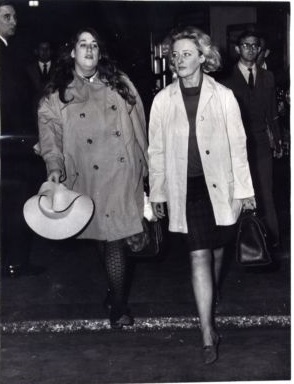
Elliot escorted to the police station in Waterloo.

Elliot escorted to the police station.

Elliot told the press she had been treated well, but not been given enough blankets. ‘Believe me,’ she said, ‘One blanket doesn’t go far round this chick.’ After a trial at West London Magistrates Court, at which no evidence was offered for the prosecution, she was released without charge and left the courtroom munching on a hash cookie that she found in her handbag. That may account for the big smiles in the photo below, taken shortly after her release.

Elliot on release.

Elliot on release.

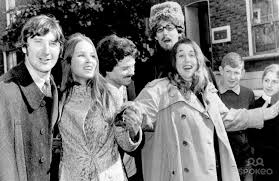
The Mamas & The Papas with Scott McKenzie after Elliot's release.

The Mamas & The Papas with Scott McKenzie after Elliot’s release.

The Mamas and the Papas with Scott McKenzie in London.

The Mamas and the Papas with Scott McKenzie in London.

While such heavyhanded treatment by the authorities of rock stars was fairly common at this time, it later emerged that Elliot’s arrest actually had more to do with her occasional boyfriend, Pic Dawson, who the British police believed was involved in a major drug-smuggling operation. According to Michelle Phillips, this was the only subject the police in London were really interested in.

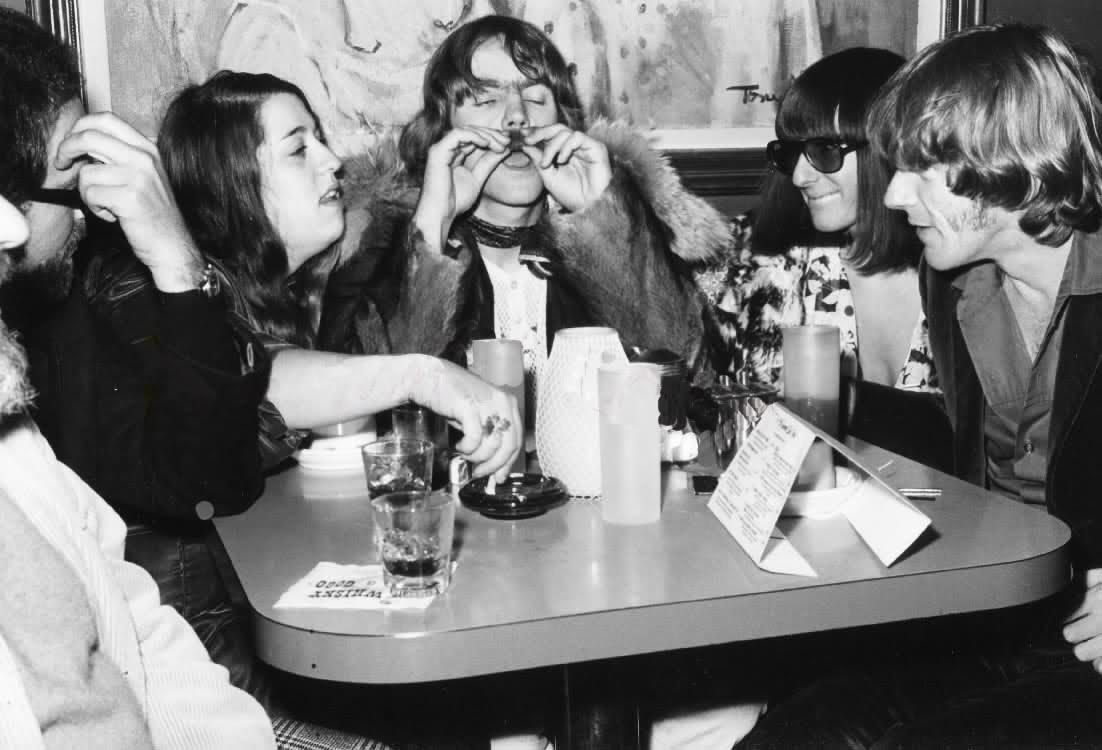
Pic Dawson and Cass Elliot at Whisky A Go Go.

Pic Dawson and Cass Elliot at Whisky A Go Go.

Dawson, who died of a drug overdose in the 1980s, was certainly an interesting figure with connections to the underworld. Numerous rumours circulate about him partly thanks to his peripheral involvement in the Manson Family murders.

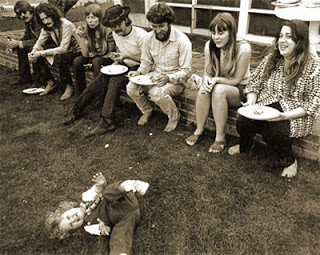
Dawson, left, and Elliot, right, at Mama Cass’s house with guests including David Crosby and Eric Clapton

Dawson knew several of the victims – basically, he supplied them drugs – and after the murders John Phillips is said to have told the police that the bloody PIG daubed on Sharon Tate’s wall actually said PIC. The LA police were also informed that Dawson, along with another of Elliot’s drug-dealing boyfriends, Bill Doyle, had been ejected from a party at the Polanski house shortly before the murders. Dawson was subsequently arrested, questioned and cleared, as was Doyle.

These were not Elliot’s only connections with the Manson murders. Dave Mason recalls, “One of the freakiest parts was that at Cass’s I saw a lot of Abbie Folger and Wojciech Frykowski until the Manson crew slaughtered them” and she knew all the victims well. But she also knew the murderers – in his autobiography, Michael Caine of all people recalls attending a party in Hollywood with Jay Sebring and Sharon Tate, where Mama Cass introduced him to a ‘scruffy little man’. His name was Charles Manson.

New London writing, or What the fuck is psychogeography anyway?

I don’t think anybody, with the possible exception of Will Self, really knows what psychogeography means but that doesn’t mean there’s not a lot of it about. For years, the London writing landscape has been dominated by three masters of the genre, the Ackroyd-Sinclair-Self trinity (in this interview, Self distinguishes between their different approaches) – it’s hard to find a book in the Museum Of London bookshop that doesn’t have an intro penned by one of them – but that is starting to change. In the past year or so, three books have been written by debutant writers that take a broadly psychogeographical approach – you can tell this by the use of words like ‘palimpsest’ and liminal’ –  to the city or patches thereof but are happy to present it in a more approachable, less LRB-approved style.

The man above is Nick Papadimitriou, and his Scarp is the most Sinclairian of the three, written by a man obsessed with a small parcel of land on the city’s northern border. ‘I’m trying to get below the surface into something that’s moving in my mind as much as in the landscape,’ he says, which doesn’t say a great deal and is therefore as neat a summary of his obscure methodology as you are likely to find. Scarp is a wonderful book, a brilliantly obsessive and beautifully observed celebration of the meditative quality of what Papadimitriou calls deep topography and the rest of us know as walking. It’s also classic psychogeography in that you read it in the knowledge that a significant proportion of the theorising is total codswallop, but at least it is entertaining codswallop, an intriguing combination of the occult and broad generalisations about place drawn from a tiny physical space.

Next up in This Other London by John Rogers, a lighter but similarly intentioned account of ten walks – ‘a plunge into the unknown’ – around fairly random parts of London that were previously just strange names on old maps to the author, a film-maker and good egg. Rogers has none of the astonishing familiarity with his territory as Papadimitriou and he makes a virtue of this, imbuing the book with the joy of new discovery. It is, as a friend noted, a salute to the rewards of simple rambling, of going somewhere unusual and just strolling, or flaneuring to use the specific vernacular of psychogeography. As an alternative guide to London walks – or an inspiration to do the same yourself – it is a marvel.

Finally, came Gareth Rees‘s Marshland, hallucinatory, speculative non-fiction about the marshes of Hackney and Walthamstow that combines Scarp‘s deep knowledge about a specific locality with the dry wit and accessibility of This Other Land. Again, Rees is fond of that psychogeographical turn of phrase – ‘There is no final draft of London’, being a particularly fine example – but laces it with humour as he explores this odd landscape of rave holes, filter beds, football pitches and reservoirs (and a fascinating landscape it is too), mixing in a bit of fiction and even offering an audio soundtrack. Rees has a tremendous, natural, written voice and the book fairly skips along. I loved it.

All three books are a lot of fun and that is the great, dirty, secret of psychogeographical writing – it is hilariously fun to do as you train your brain to make grandiose statements about people, place and history that you are fairly sure won’t stand up to any great inquisition but look fucking brilliant on paper. Bill Drummond’s neat summary of psychogeography is perfect – ‘An intellectual justification for what I have been doing most of my life’.

I do not consider myself to be a psychogeographical writer (and here I express some of my dislike of it), but that’s not to say I’ve never indulged in it myself of occasion (as here, when writing about Wappingness), particularly when asked to do so by property developers, who seem to love this style of writing as a way to signify their deeper engagement with the city they are hoping to exploit.

By my experience then, psychogeography is used as much to shift property as it is to expand and combine the frontiers of space and mind, which is perhaps inevitable in London, where any amount of folklore and fauna only really has any value if it can be seen to have a positive effect on land prices. I’m not entirely sure that this is what Guy Debord was hoping for when he first conceived his theory, but given that he’s long gone there’s not a great deal he can do about it.

Situationists at the Sailors' Society in London during the 4th Conference of the Situationist International. Those assembled included (from l. to r.): Attila Kotányi, Hans-Peter Zimmer, Heimrad Prem, Asger Jorn (covered), Jørgen Nash (front), Maurice Wyckaert, Guy Debord, Helmut Sturm, and Jacqueline de Jong. To ensure that the proceedings were kept away from any contact with artistic circles or London newspapers, the conference took place in Limehouse, "a district renowned for its criminals."

Guy Debord’s Situationists in Limehouse, in search of Wappingness and investment opportunities.